
 English
 中文简体
中文简体 русский
 Español
Understanding the Two Core Formats of Carbon Fiber Cloth
When engineers and fabricators select a carbon fiber cloth for a structural or performance application, the decision often comes down to two dominant weave families: woven fabric and unidirectional fabric. Each format distributes fiber orientation differently, which directly affects how loads travel through a laminate once it is cured with resin.
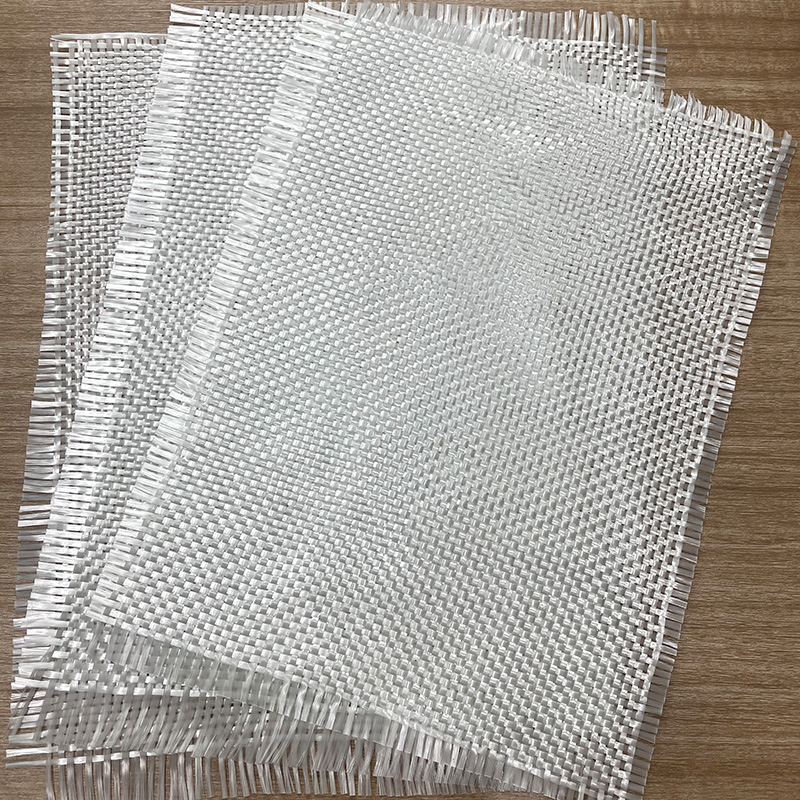
Woven carbon fiber cloth interlaces fiber tows in two perpendicular directions, typically at zero and ninety degrees, creating a fabric that behaves consistently across multiple load paths. Unidirectional cloth, by contrast, aligns nearly all fibers along a single axis, concentrating tensile performance in one direction while sacrificing strength in others. Understanding this fundamental difference is the starting point for any material selection process.
Mechanical Behavior: How Fiber Orientation Shapes Performance
The orientation of fiber tows within a carbon fiber fabric determines how the material responds to tension, compression, and shear. A woven structure spreads reinforcement across two axes, which makes it more forgiving when loads are unpredictable or multidirectional. A unidirectional layup, on the other hand, delivers exceptional stiffness and tensile capacity along its primary axis but contributes very little strength perpendicular to that axis unless combined with additional plies.
In practice, most structural laminates combine both formats: unidirectional plies handle the dominant load direction, while woven layers manage secondary stresses and surface durability.
Key Mechanical Distinctions
- Woven cloth offers balanced strength in two directions, reducing the risk of directional weak points.
- Unidirectional cloth achieves higher strength-to-weight efficiency when loads are predictable and linear.
- Woven fabric typically shows a slightly lower fiber volume fraction due to crimp at crossover points.
- Unidirectional fabric maintains straighter fiber paths, which can translate into higher tensile modulus.
Side-by-Side Comparison Table
| Characteristic | Woven Carbon Fiber Cloth | Unidirectional Carbon Fiber Cloth |
|---|---|---|
| Fiber Orientation | Two directions, interlaced | Single dominant direction |
| Load Distribution | Balanced, multidirectional | Concentrated, linear |
| Surface Aesthetics | Visible weave pattern | Flat, directional streaks |
| Drapability | High, conforms to curves | Lower, prefers flat layups |
| Typical Use Case | Panels, shells, cosmetic layers | Beams, spars, tension members |
| Fiber Volume Efficiency | Moderate due to crimp | Higher along primary axis |
Visualizing Fiber Architecture
The diagram below illustrates the structural difference between a woven pattern and a unidirectional layup, showing how fiber tows are arranged relative to the load axis.
Where Each Format Performs Best
Choosing between woven and unidirectional formats depends heavily on the geometry of the part and the direction of expected loading. A woven carbon fiber cloth is often preferred when a part must resist forces from multiple directions or when the surface finish matters for cosmetic reasons.
Woven Cloth Is Commonly Selected For
- Curved panels and shells that require good drape over molds
- Enclosures and covers where torsional loads are unpredictable
- Visible surface layers where the weave pattern is a design feature
- Repair patches where multidirectional reinforcement adds durability
Unidirectional Cloth Is Commonly Selected For
- Beams, spars, and rods where load travels along one clear axis
- Reinforcement strips added to existing structures for targeted stiffness
- Tension members in trusses or frames
- Hybrid layups where directional plies are stacked at engineered angles
Hybrid Layups: Combining Both Formats
Many structural designs do not rely on a single fabric type. Instead, engineers stack layers of woven and unidirectional material to balance stiffness, weight, and multidirectional strength. A typical hybrid layup might place unidirectional plies at the outer surfaces to maximize bending stiffness, with woven layers in the core to resist shear and impact.
Practical Layup Consideration
A laminate built entirely from unidirectional plies at zero degrees can exhibit strong tensile performance along one axis but may crack prematurely under off-axis loading. Introducing even one woven ply, or angling unidirectional plies at plus and minus forty five degrees, significantly improves resistance to torsion and edge delamination.
Weight and Thickness Considerations
Both formats are available in a range of areal weights, and the choice affects final part thickness and overall mass. A lightweight carbon fiber cloth in either format can reduce the number of plies needed for thin-wall components, but the two formats reach their weight savings differently.
| Consideration | Woven Format | Unidirectional Format |
|---|---|---|
| Ply Thickness Consistency | Generally uniform | Can vary with tow spreading |
| Weight Efficiency for Bending | Moderate | High along load axis |
| Ease of Hand Layup | Easier due to drape | Requires careful alignment |
| Resin Uptake | Slightly higher due to crimp | Lower, straighter fiber paths |
Fabrication Process Differences
Handling characteristics also separate these two fabric types during layup. Woven fabric drapes more readily over compound curves because the interlaced structure allows some give at the crossover points. Unidirectional fabric tends to resist bending across the fiber direction, which makes it better suited to flat or gently curved surfaces where fiber alignment must remain precise.
General Fabrication Steps for Both Formats
- Cut the fabric to the required pattern, accounting for fiber orientation relative to the expected load path.
- Position the cloth on the mold or substrate, checking that unidirectional plies align with marked reference lines.
- Apply resin evenly, working out trapped air without disturbing fiber alignment.
- Layer additional plies as specified in the design, alternating orientation where needed for balanced strength.
- Cure under the recommended time and pressure conditions before trimming the finished part.
Resin Compatibility and Bonding
Both woven and unidirectional formats are widely used with common laminating resins, and most commercially available fabric is treated with a surface sizing that improves wet-out and adhesion. An epoxy compatible carbon fiber cloth allows resin to penetrate the tow bundles evenly, which reduces the risk of dry spots or voids in the cured laminate.
Because unidirectional fabric has fewer crossover points, resin can sometimes pool along the fiber channels if not worked in carefully. Woven fabric, with its interlaced structure, tends to wet out more predictably but may trap slightly more resin at the crossover points, marginally increasing part weight.
A Practical Framework for Choosing Between the Two
Rather than treating this as a simple either-or decision, it helps to ask a few targeted questions about the part being built.
- Does the part experience load from one dominant direction, or from multiple directions simultaneously.
- Is the surface finish and visible weave pattern important to the final design.
- Does the geometry involve tight curves that require good fabric drape.
- Is the priority maximum stiffness per unit weight, or balanced multidirectional toughness.
Answering these questions typically points toward woven fabric for general-purpose, multidirectional, or cosmetic applications, and toward unidirectional fabric for targeted, high-stiffness, single-axis reinforcement. A high tensile carbon fiber cloth in unidirectional form is often the more efficient choice when the loading direction is well understood in advance.
Frequently Asked Questions
Q1: Is woven carbon fiber cloth stronger than unidirectional cloth
Strength depends on direction. Woven cloth offers more balanced strength across two axes, while unidirectional cloth is stronger along its single fiber direction but weaker perpendicular to it.
Q2: Can woven and unidirectional cloth be combined in the same layup
Yes, many structural laminates combine both formats to balance directional stiffness with multidirectional toughness, particularly in parts subject to complex loading.
Q3: Which format is easier to work with for curved molds
Woven fabric generally drapes better over curved surfaces because its interlaced structure allows more flexibility at the crossover points compared to straight unidirectional tows.
Q4: Does weave pattern affect the final surface appearance
Yes, woven fabric produces a visible crosshatch pattern that is often used as a cosmetic surface layer, while unidirectional fabric shows parallel streaks along the fiber direction.
Q5: How do I decide the number of plies needed
Ply count depends on the target thickness, expected load, and stiffness requirements of the part, and is typically determined through structural analysis or testing rather than a fixed rule.
 Previous