
 English
 中文简体
 русский
 Español
The Core Problem: Concrete Cracks Before It Crushes
Concrete is a material defined by a contradiction. It resists compression remarkably well, yet its tensile capacity is only a fraction of its compressive strength. Once tensile stress exceeds that modest threshold, microcracks appear. Left unchecked, those cracks propagate, interconnect, and transform a ductile structural element into a brittle failure waiting to happen. The load-bearing capacity does not decline gradually; it drops abruptly.
carbon fiber cloth addresses this contradiction directly. Applied externally to existing concrete members, it introduces a high-strength, corrosion-resistant tensile skin that works in tandem with the concrete substrate. The mechanism is dual: circumferential confinement restricts lateral expansion under axial load, while discrete fiber tows bridge cracks at the micro level, preventing them from widening into structural fissures. The result is a measurable shift in failure mode, from sudden and brittle to gradual and ductile.
This article examines the mechanics behind that improvement, the strength gains that are realistically achievable, the cost variables that determine project pricing, and the quality benchmarks that separate effective strengthening from wasted expenditure.
The Mechanics: How Carbon Fiber Cloth Confines and Reinforces Concrete
Understanding why carbon fiber cloth works requires looking at what happens inside a concrete column or beam when load is applied. The material does not simply add strength in a vague sense. It alters the stress state of the concrete itself.
Hoop Confinement Turns Brittle Concrete into Ductile Material
When a concrete column carries axial compression, it does not remain dimensionally stable. Poisson effects cause the material to expand laterally as it shortens vertically. In an unconfined column, this lateral expansion eventually reaches a critical point where the concrete cover spalls and the core disintegrates.
Carbon fiber cloth wrapping changes that sequence. The fabric, saturated with epoxy and bonded around the column perimeter, resists the lateral expansion. Because the fibers are oriented circumferentially, they engage in tension as the concrete pushes outward. This creates a passive confining pressure: the more the concrete tries to expand, the more the carbon fiber resists, placing the concrete core into a triaxial compression state.
Triaxial compression is the key. Under lateral confinement, the apparent axial strength of concrete increases substantially, and more importantly for seismic and fatigue applications, the material retains load capacity after peak stress rather than failing catastrophically. Experimental research confirms that carbon fiber sheet confinement, similar in principle to closely spaced transverse reinforcement, can increase both the ductility and compressive strength of concrete remarkably.
Crack Bridging at the Micro Level
Confinement addresses compression-dominated members. For flexural elements, beams and slabs, the critical mechanism is different. When a beam bends under load, the bottom face experiences tension. Concrete cracks form perpendicular to the principal tensile stress. Carbon fiber cloth applied to the tension face acts as an external reinforcement layer, spanning those cracks.
The individual carbon fiber tows, aligned in the direction of tensile stress, carry load across the crack faces. This crack bridging effect does not prevent cracks from forming, but it restricts their opening. A narrower crack transfers aggregate interlock and shear friction more effectively, preserving the integrity of the concrete in the compression zone above. Research on carbon fiber reinforced concrete indicates that appropriate fiber content can improve tensile and flexural strength while reducing brittleness, with peak performance observed at specific dosage levels.
Why Carbon Fiber Cloth Beats Steel Jacketing
Steel jacketing has served as a reliable strengthening method for decades. It works. But it carries penalties that carbon fiber cloth avoids.
| Factor | Carbon Fiber Cloth | Steel Jacketing |
|---|---|---|
| Added dead load | Negligible, approximately 200 to 300 g/m² per layer | Significant, steel plates plus welds |
| Corrosion risk | None, carbon fiber is chemically inert | Requires coating and periodic inspection |
| Cross-section increase | Minimal, millimeters | Substantial, tens of millimeters |
| Installation access | Flexible fabric conforms to curved and irregular surfaces | Rigid plates require extensive surface preparation and bolting |
The practical consequence is that carbon fiber cloth can be applied in occupied buildings with minimal disruption, on columns where architectural clearances cannot be reduced, and in environments where future corrosion maintenance is impractical.
What Strength Gains Can You Realistically Expect?
Vague promises of significant improvement serve no one. The actual strength gain depends on member geometry, existing concrete quality, fiber orientation, number of layers, and anchorage detailing. However, published research and field data provide useful anchors.
For columns confined by carbon fiber cloth wrapping, the compressive strength and deformation capacity can increase by a factor of two or more, particularly when the concrete is of moderate or lower original strength and the wrapping provides continuous circumferential restraint. The improvement is most pronounced when failure would otherwise be governed by brittle crushing rather than steel yielding.
In carbon fiber reinforced concrete, where short fibers are mixed into the concrete matrix rather than applied externally, studies show that compressive, splitting tensile, and flexural strengths follow a bell curve with fiber dosage. At a fiber volume fraction of 0.60 percent, these strengths reach their maximum values; beyond that point, workability and fiber dispersion degrade, and strength gains reverse. This is a critical distinction: external wrapping and internal fiber reinforcement are different technologies with different optimal parameters.
For beams strengthened in flexure with carbon fiber cloth, the gain is more sensitive to installation quality. A well-bonded, properly anchored system can restore or exceed original design capacity. A poorly bonded system may delaminate before the fiber reaches its tensile capacity, producing little benefit. The quality of the epoxy adhesive and the surface preparation of the concrete substrate are not secondary details; they determine whether the carbon fiber and concrete act as a composite system or as two independent layers.
But how much does it actually cost to apply this level of strengthening?
The answer depends on specifications and site conditions. The next section breaks down the variables.
Carbon Fiber Cloth Cost: What Drives the Price Per Square Meter
Search interest in carbon fiber strengthening is rarely purely academic. Professionals and property owners want to understand the mechanism, but the underlying question is almost always economic: what will this cost for my project? Providing a single number would be misleading. Providing the variables that move that number is useful.
Material Specs That Move the Number
Two specifications dominate the material cost: areal weight and grade.
- Areal weight: 200 g/m² cloth is the standard specification for many structural strengthening applications. It balances handling ease with tensile capacity. 300 g/m² cloth provides higher strength per layer but costs more per square meter and requires more careful saturation. The choice affects not only material cost but also the number of layers required to achieve a target capacity.
- Grade: Grade I carbon fiber cloth must meet higher mechanical thresholds than Grade II. For structural strengthening, Grade I is the appropriate baseline. Material price differentials between grades are meaningful and should be verified through test reports, not assumed from supplier claims.
The Hidden Cost Variables Most Articles Don’t Mention
The cloth itself is only part of the installed cost. Several factors routinely shift the final price per square meter by 50 percent or more.
- Epoxy adhesive quality and quantity: Structural-grade saturating adhesive is not interchangeable with general-purpose epoxy. The adhesive must wet out the fibers, bond to the concrete, and transfer stress without creep under sustained load. Lower-grade adhesives reduce initial cost but compromise the composite action that makes the system work.
- Installation difficulty: A flat slab soffit is straightforward. A beam-column joint with intersecting surfaces, limited access, and overhead work is not. Corner detailing, penetration around existing services, and surface preparation of deteriorated concrete all add labor hours. High-rise work adds access costs.
- Number of layers: Single-layer systems are the baseline. Double-layer systems roughly double material and labor for the wrapping operation, though the second layer is usually faster to install than the first. The cost difference between one and two layers can approach a factor of 1.8 to 2.0 in comprehensive pricing.
Real-World Price Range
Market data for carbon fiber cloth strengthening provides a useful reference range. Domestic 200 g/m² carbon fiber cloth with standard epoxy and installation typically falls in the range of 200 to 400 RMB per square meter for comprehensive work. Imported materials or higher-specification systems can reach 400 to 800 RMB per square meter. Beam-column joints, double-layer applications, and projects requiring extensive surface repair push toward the upper end or beyond.
These figures are anchors, not quotations. A 200 g/m² single-layer application on a flat slab and a 300 g/m² double-layer application on a spandrel beam with deteriorated cover concrete are not comparable projects. The only reliable way to obtain an actionable price is to provide project-specific parameters.
Cost variables summary: 200 g vs. 300 g cloth, single vs. double layer, flat slab vs. beam-column joint, standard vs. structural-grade adhesive, and accessible vs. high-access installation can each shift the installed price by a meaningful margin. Tell us your parameters and we can return an accurate estimate.
How to Evaluate Carbon Fiber Cloth Quality Before You Buy
The carbon fiber strengthening market contains products that look similar in photographs and differ enormously in performance. A low price per roll is meaningless if the material fails to meet the mechanical thresholds required for structural design. Three evaluation points matter most.
Tow Size and Consistency
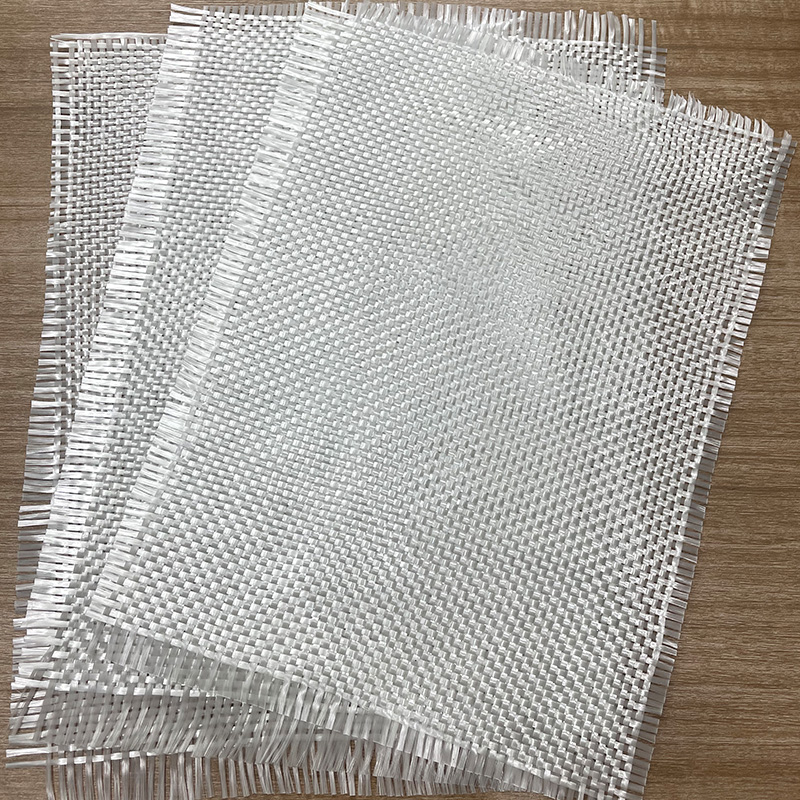
Carbon fiber cloth is woven from bundles of filaments called tows. A 12K tow contains 12,000 filaments. Smaller tows generally distribute stress more uniformly and are less prone to internal voids during impregnation. Large tows reduce manufacturing cost but can introduce inconsistency in wet-out and load transfer. For structural strengthening, 12K or smaller is the preferred range.
Mechanical Benchmarks
Design codes establish minimum properties for structural carbon fiber cloth. For Grade I material, tensile strength should be at least 3,400 MPa, and tensile elastic modulus should be at least 240 GPa. These are not aspirational targets; they are the thresholds below which the material should not be used for structural calculations. Reputable suppliers provide batch-specific test reports from accredited laboratories, not generic certificates.
| Property | Grade I Threshold | Why It Matters |
|---|---|---|
| Tensile strength | ≥ 3,400 MPa | Determines the maximum load the fiber can carry before rupture |
| Tensile modulus | ≥ 240 GPa | Controls stiffness contribution and crack-bridging effectiveness under service loads |
| Elongation at break | ≥ 1.6% | Indicates the deformation capacity available for stress redistribution |
The Adhesive Is Part of the System
Carbon fiber cloth alone does not strengthen concrete. The adhesive is the load-transfer medium. A high-strength cloth bonded with an inadequate adhesive produces a system that fails at the interface before the fiber is stressed. Structural-grade saturating epoxy must be formulated for the specific application: viscosity for wet-out, pot life for the installation conditions, and cured mechanical properties compatible with the fiber. Do not accept substitutions without verification.
The difference between a supplier who provides test reports and installation guidance and one who sells cloth by the roll without technical support is often the difference between a strengthening system that performs as designed and one that provides false confidence.
Get a Project-Specific Quote
If you have reached this point, you likely have a specific structure in mind. To provide a meaningful cost estimate, we need four pieces of information:
- Strengthening location: Beam, slab, column, or wall. Each has different labor and detailing requirements.
- Approximate area: Square meters of concrete surface to be covered, not floor area.
- Number of layers: Single-layer or multi-layer, if already determined by a structural engineer.
- Surface condition: Whether the concrete requires repair or leveling before application.
Send us these details and we will return a cost estimate within 24 hours. No obligation, no generic price list.
Ready to price your strengthening project?
Send your project details: member type, area, layers, and surface condition. We respond within one business day.
Conclusion
Carbon fiber cloth improves concrete strength by confining the core under axial load and bridging cracks under tensile stress, without adding significant dead load or introducing a future corrosion liability. The mechanics are well understood, the strength gains are measurable, and the cost variables are identifiable. The remaining variable is your project’s specific parameters. When you are ready to put numbers to those parameters, we are ready to provide them.
Frequently Asked Questions
Q1: How much compressive strength gain can carbon fiber cloth wrapping provide?
For columns with moderate original concrete strength, well-executed continuous wrapping can increase compressive strength by a factor of two or more, along with a substantial improvement in ductility. The exact gain depends on the number of layers, the concrete’s unconfined strength, and the effectiveness of the adhesive bond.
Q2: Is carbon fiber cloth better than steel jacketing for all applications?
No. Carbon fiber cloth offers clear advantages in corrosion resistance, weight, and installation flexibility. Steel jacketing remains competitive for applications requiring very high axial ductility or where local steel fabrication is more economical. The appropriate choice depends on structural demands, access conditions, and lifecycle cost considerations.
Q3: What is the typical cost per square meter for carbon fiber cloth strengthening?
For domestic 200 g/m² material with standard installation, comprehensive pricing typically ranges from 200 to 400 RMB per square meter. Imported or higher-specification systems range from 400 to 800 RMB per square meter. Complex joints, double-layer systems, and extensive surface repair increase the price beyond these ranges.
Q4: How can I verify that the carbon fiber cloth meets structural standards?
Request batch-specific test reports from an accredited laboratory. Verify tensile strength of at least 3,400 MPa and tensile modulus of at least 240 GPa for Grade I material. Check that the tow size is appropriate, 12K or smaller for structural use, and that the supplied adhesive is specified for structural saturating applications.
Q5: Does carbon fiber cloth work on curved or irregular concrete surfaces?
Yes. The flexibility of the fabric allows it to conform to curved columns, arched soffits, and irregular repair surfaces. This is one of its practical advantages over rigid steel plates. Proper surface preparation and careful wet-out are still required to avoid voids at the bond line.