
 English
 中文简体
 русский
 Español
MATERIAL SELECTION GUIDE
Understanding the Cost and Performance Trade-Off
Selecting the right glass fiber cloth is an important decision in composite manufacturing. Buyers must balance material prices, mechanical performance, resin consumption, processing efficiency and finished component requirements. Two commonly considered reinforcement options are multi-axial glass fiber cloth and woven fiberglass cloth. Although both use glass fibers to reinforce composite structures, their different fiber arrangements influence load transfer, laminate properties and manufacturing behavior.
Woven fiberglass cloth is widely used because of its established processing characteristics, accessible material options and relatively economical purchase price. Multi-axial glass fiber cloth, on the other hand, uses multiple layers of aligned fibers stitched together, providing greater flexibility in designing reinforcement directions and laminate structures. Its initial purchase cost may be higher, but reduced crimp, directional reinforcement and optimized material consumption can improve overall production economics.
The more suitable option depends on the application rather than the fabric price alone. Understanding structural differences, mechanical characteristics, resin uptake and production requirements helps engineers and procurement teams determine where additional material investment is justified and where conventional woven reinforcement remains practical.
The Core Structural Difference: Crimp vs. Straight Fibers
The most important distinction between woven fiberglass cloth and multi-axial glass fiber cloth is how the glass filaments are arranged. This structural difference influences the efficiency of load transfer, laminate thickness, surface characteristics and the way reinforcement behaves during composite manufacturing.
1. How Woven Fiberglass Cloth Is Constructed
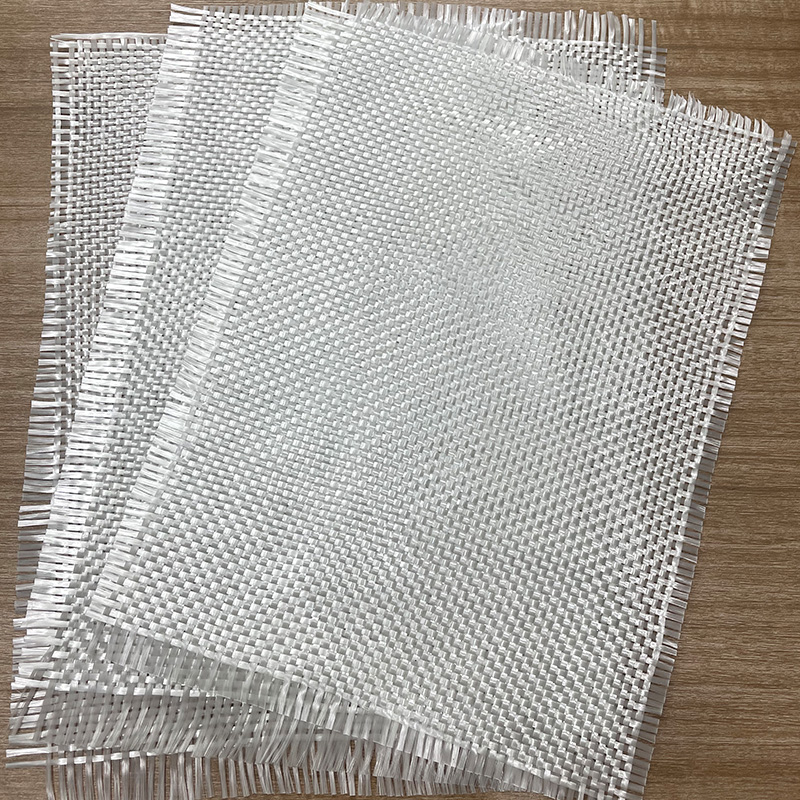
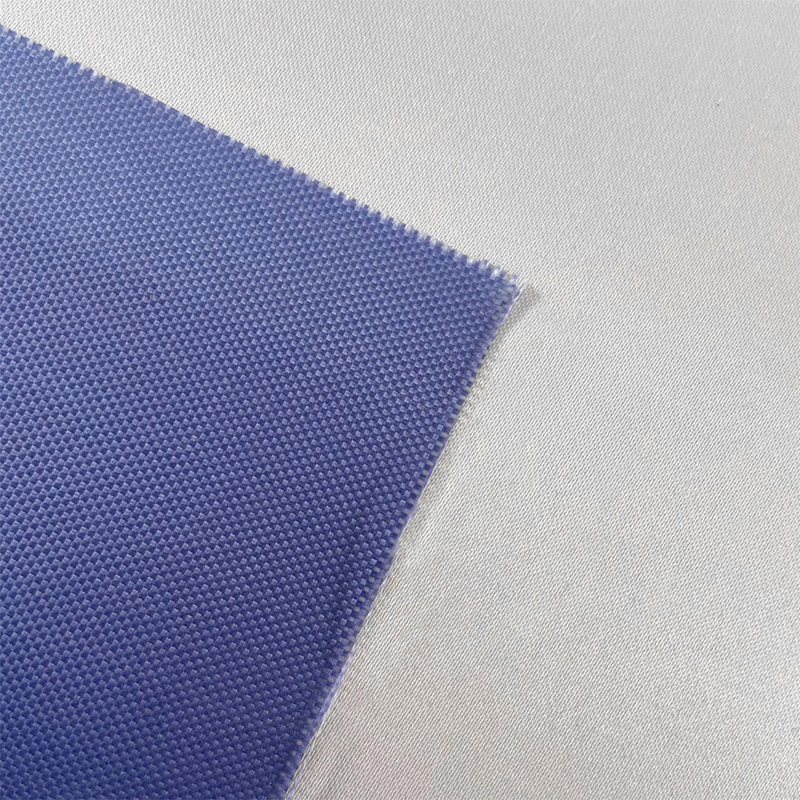
Woven fiberglass cloth is manufactured by interlacing two sets of continuous glass fiber yarns. Warp yarns run along the length of the fabric, while weft yarns extend across its width. During weaving, these yarns pass alternately over and under one another to create a stable textile structure.
Common weaving patterns include plain weave, twill weave and satin weave. Each pattern produces different yarn interlacing frequencies, surface characteristics and draping behavior.
- Plain weave: Warp and weft yarns alternate regularly, producing a stable structure with frequent interlacing points.
- Twill weave: Yarns pass over and under multiple neighboring yarns, creating a diagonal surface pattern and generally improving drapability.
- Satin weave: Longer yarn floats reduce the frequency of interlacing, allowing greater flexibility when forming certain curved components.
Because the yarns must pass over and under one another, they develop a wavy profile known as crimp. When a composite component experiences tensile loading, some deformation is associated with the straightening of these curved yarn paths before the fibers can carry their full axial load.
Crimp can also introduce local stress concentrations around yarn crossover points. Its influence depends on weave construction, yarn tension, fiber sizing, laminate design and loading direction. Therefore, woven fiberglass cloth does not necessarily use the full theoretical tensile capability of every filament as efficiently as a straight-fiber reinforcement.
2. How Multi-Axial Glass Fiber Cloth Is Constructed
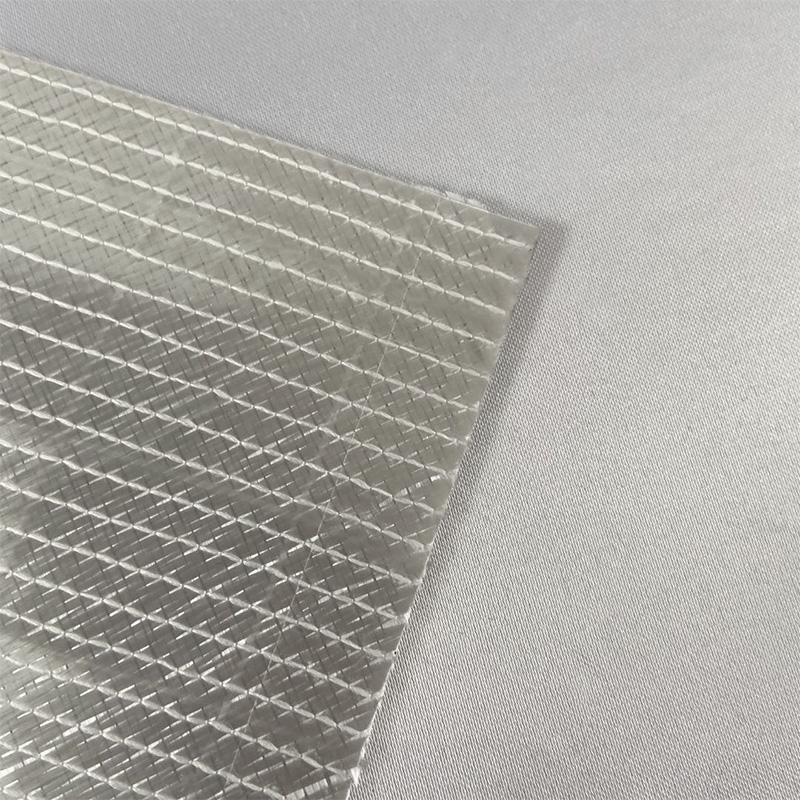
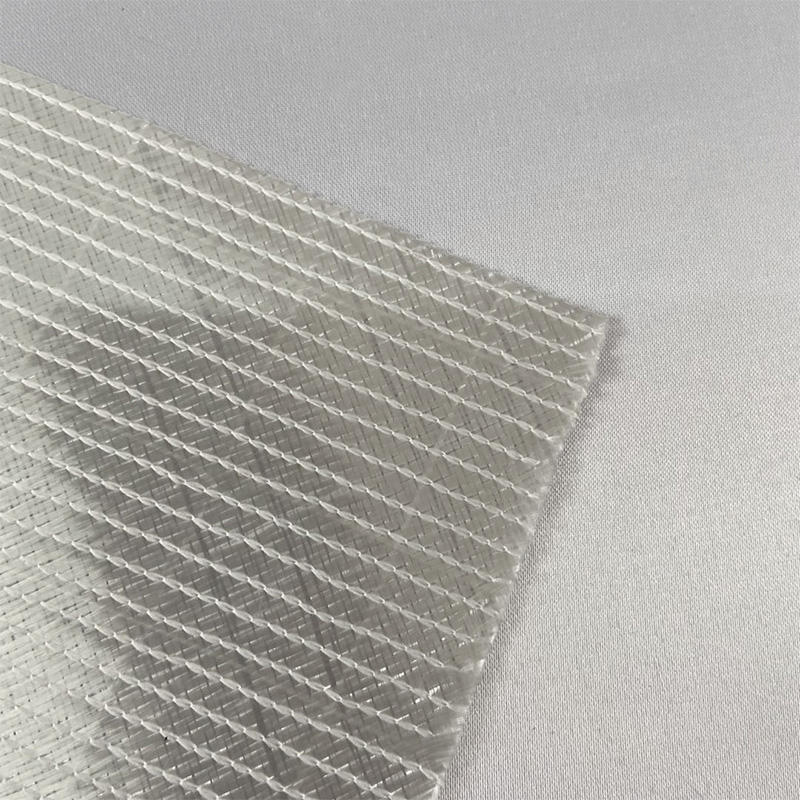
Multi-axial glass fiber cloth, often described as a stitched non-crimp fabric, uses continuous glass fiber rovings arranged in separate directional layers. Instead of interlacing warp and weft yarns, the reinforcement layers are placed in their intended orientations and secured with stitching yarns.
Depending on the product construction, the layers may contain fibers oriented at 0, 90, plus or minus 45 degrees, or other specified directions. These orientations allow manufacturers to tailor reinforcement to the expected load paths of a component.
Since the main reinforcing fibers remain relatively straight rather than following an over-and-under weaving path, the fabric can provide more direct load transfer along the fiber direction. This is particularly relevant when designing laminates exposed to significant tensile, bending or multidirectional loading.
The stitching holds the reinforcement layers together during handling, cutting and lay-up. It also helps maintain the intended fiber orientation throughout the manufacturing process. However, stitching yarns are not the primary source of structural reinforcement, and their type, spacing and tension can influence fabric handling and laminate characteristics.
Structural Comparison of Two Reinforcement Types
Illustrative structural diagrams. Actual fabric geometry, layer count and stitching patterns vary by specification.
3. Why Fiber Orientation Matters in Composite Design
Fiber orientation determines how efficiently a reinforcement carries loads in different directions. A woven fabric generally provides reinforcement along its warp and weft directions, making it suitable for components with relatively predictable in-plane loading.
Multi-axial glass fiber cloth offers additional flexibility because designers can combine several orientations within a single reinforcement product. For example, a laminate exposed to longitudinal tension, transverse loads and in-plane shear may benefit from a combination of 0-degree, 90-degree and 45-degree reinforcement layers.
Nevertheless, multi-axial construction is not automatically preferable for every project. If the component primarily experiences loading in two directions and requires a particular surface finish, a suitable woven reinforcement may satisfy the engineering requirements without unnecessary structural complexity.
Mechanical Properties Comparison: Tensile Strength, Stiffness and Resin Uptake
Evaluating glass fiber cloth requires more than comparing nominal fabric weight. Tensile properties, fiber orientation, fabric architecture, resin compatibility and final laminate quality all influence the performance of a composite component. The following comparison highlights the major considerations for material selection.
| Comparison Factor | Woven Fiberglass Cloth | Multi-Axial Glass Fiber Cloth |
|---|---|---|
| Fiber arrangement | Interlaced warp and weft | Separate aligned layers with stitching |
| Fiber crimp | Present at crossover points | Low crimp in primary reinforcing fibers |
| Load orientation | Mainly warp and weft directions | Multiple engineered directions |
| Tensile efficiency | Influenced by yarn crimp | Efficient along aligned fiber directions |
| Laminate stiffness | Depends on weave and stacking sequence | Can be tailored through directional layers |
| Resin distribution | Influenced by interlacing and fabric density | Influenced by layer spacing and stitching |
| Surface characteristics | Distinct textile patterns | Generally less uniform surface texture |
| Typical application | Panels, covers and general composite parts | Large structural and multidirectional components |
1. Tensile Strength and Fiber Load Transfer
Tensile strength describes the ability of a material or composite laminate to resist pulling forces before failure. In glass fiber reinforcement, the orientation and continuity of the fibers have a substantial influence on the resulting tensile properties.
Woven fiberglass cloth provides reinforcement in two principal directions. However, the crimp introduced during weaving means that the fiber path is not perfectly straight. When the laminate is loaded, the curved yarns may undergo initial geometric straightening, and local stresses can develop around crossover areas.
Multi-axial glass fiber cloth reduces this geometric limitation by arranging the primary reinforcement fibers in relatively straight layers. When the applied force follows the direction of these fibers, the load can be transferred more directly through the reinforcement.
For example, consider two hypothetical composite panels manufactured with comparable glass fiber content and resin systems. One panel uses a woven reinforcement, while the other uses a directional non-crimp reinforcement aligned with the principal tensile load. The second panel may demonstrate higher tensile efficiency in that direction because fewer fibers are diverted from the load path by crimp.
However, this does not establish a universal strength advantage. Actual tensile performance depends on fiber type, sizing, resin properties, fiber volume fraction, void content, curing conditions and specimen orientation. A woven laminate can outperform a poorly designed multi-axial laminate, particularly when the loading direction does not match the latter's fiber arrangement.
2. Stiffness and Dimensional Stability
Stiffness is another important consideration in structural composite design. Components such as wind turbine blades, marine hulls and industrial equipment panels must maintain their intended geometry under operating loads.
Woven reinforcement provides relatively balanced in-plane support along its two principal yarn directions. Its interlaced structure can also help maintain fabric integrity during handling and forming.
Multi-axial reinforcement allows engineers to adjust stiffness distribution by selecting the orientation and weight of individual layers. More reinforcement can be placed in directions where bending or tensile loads are expected to be greater, while unnecessary material can be avoided in less critical directions.
For instance, a composite panel subjected to substantial longitudinal bending may require more reinforcement along its main span. A multi-axial design can allocate a greater proportion of fibers in that direction. If transverse stability is also necessary, additional 90-degree layers can be incorporated.
The result is greater flexibility in laminate engineering, rather than an automatic increase in stiffness under every loading condition. Engineers should assess the complete laminate schedule instead of evaluating an individual fabric layer in isolation.
3. Resin Uptake and Wet-Out Characteristics
Resin consumption is an important part of composite production costs. Glass fibers provide reinforcement, but the resin must wet the fibers adequately, bind the reinforcement layers and transfer stress throughout the finished laminate.
Woven fiberglass cloth contains yarn crossovers and interlaced spaces that affect resin flow. Depending on the weave, yarn density and manufacturing process, these areas can influence how resin penetrates the fabric and fills the spaces between filaments.
Multi-axial glass fiber cloth often presents a relatively open structure between its aligned fiber layers. This can provide useful resin flow paths in suitable vacuum infusion and resin transfer molding processes. The arrangement may also help resin penetrate multiple layers when the fabric is properly selected and processed.
However, it is inaccurate to assume that every multi-axial fabric consumes less resin than every woven fabric. Resin demand is affected by the following variables:
- Fiber volume fraction: A higher proportion of glass fiber generally reduces the space available for resin, provided adequate wet-out is maintained.
- Fabric architecture: Yarn density, stitching, layer spacing and reinforcement thickness influence resin distribution.
- Resin viscosity: Higher-viscosity resin may require additional processing time or different infusion conditions.
- Manufacturing method: Hand lay-up, vacuum bagging, vacuum infusion and resin transfer molding have different resin delivery characteristics.
- Laminate quality requirements: Insufficient resin creates dry spots, while excessive resin can increase component weight without proportionate structural benefits.
For procurement teams, the more meaningful comparison is resin consumption per finished component rather than an assumed consumption difference based solely on fabric category.
4. Areal Weight and Reinforcement Thickness
Areal weight, expressed in grams per square meter, indicates the mass of reinforcement contained in a given fabric area. It is an essential specification when calculating laminate weight, estimating material requirements and comparing reinforcement products.
Woven fiberglass cloth is available in a broad range of weights, from lightweight fabrics for surface reinforcement to heavier constructions for structural laminates. Depending on the product range, heavy woven fabrics can approach or exceed 800 g/m2.
Multi-axial glass fiber cloth is also available in different weight configurations. Combining several directional layers makes it possible to produce heavy reinforcement products, including specifications above 1200 g/m2.
These figures should be treated as illustrative market specifications rather than universal manufacturing limits. Available weights depend on fiber type, yarn size, layer configuration and supplier capabilities.
Higher areal weight does not necessarily mean better mechanical performance. A 1200 g/m2 fabric with unsuitable fiber orientations may be less effective for a particular loading condition than a lighter fabric designed around the actual load paths.
Cost Analysis: Why the Cheaper Fabric Is Not Always Cheaper
Purchase price is usually the first factor considered when sourcing reinforcement materials. Woven fiberglass cloth often has a lower unit price because its manufacturing processes are established and its product range is widely available. Multi-axial products may carry an additional cost because of their layered construction, stitching requirements and more specialized manufacturing specifications.
Nevertheless, comparing material prices per kilogram alone can produce misleading procurement decisions. The real cost of reinforcement includes the amount of material needed, resin consumption, production labor, processing time, scrap rate and the performance requirements of the finished component.
1. Understanding the Initial Price Difference
In some purchasing situations, multi-axial reinforcement may carry a price premium of approximately 15 to 30 percent over a comparable woven product. This is an indicative purchasing scenario, not a fixed industry-wide price difference. The actual gap depends on glass fiber specifications, fabric weight, layer count, stitching type, order quantity, roll width and transportation costs.
The difference can become smaller when comparing specialized woven products with heavier or more complex multi-axial structures. Certain multi-axial configurations may also achieve competitive pricing through production scale and standardized specifications.
Procurement teams should therefore request quotations based on equivalent technical requirements. Comparing a lightweight plain-weave fabric with a heavy multi-axial reinforcement without adjusting for structural performance will not provide a meaningful cost assessment.
2. Compare the Cost Per Finished Component
A more useful purchasing method is to calculate how much reinforcement is needed to manufacture one acceptable finished component. Consider an illustrative structural panel that requires a specific tensile performance and bending stiffness.
With woven fiberglass cloth, the manufacturer may need several layers to achieve the required laminate properties. Each additional layer increases the amount of fabric handled, cut, positioned and impregnated with resin.
With a suitably engineered multi-axial reinforcement, several fiber orientations can be supplied in one stitched product. This may reduce the number of individual fabric placement operations and simplify the laminate schedule.
01
Material Cost
Compare the total reinforcement weight required to meet the same component specification rather than comparing the purchase price per kilogram alone.
02
Resin Consumption
Evaluate resin usage during production and verify whether the selected fabric architecture achieves the required fiber wet-out and laminate quality.
03
Labor and Processing
Consider cutting, stacking, positioning, impregnation, vacuum preparation and inspection time for the complete manufacturing process.
04
Quality and Waste
Account for rejected parts, trimming waste, dry spots, inconsistent thickness and additional material required to achieve acceptable production results.
3. Illustrative Production Cost Comparison
The following example demonstrates why the initial purchase price may not determine the lowest-cost solution. It uses hypothetical production figures for a composite component. The values are intended to illustrate a calculation method and are not quotations or guaranteed savings.
| Cost Item | Woven Reinforcement | Multi-Axial Reinforcement |
|---|---|---|
| Fabric purchase cost | $100 | $125 |
| Resin consumption cost | $65 | $50 |
| Lay-up labor cost | $40 | $25 |
| Processing and handling | $15 | $12 |
| Illustrative total | $220 | $212 |
In this hypothetical example, the multi-axial reinforcement costs more to purchase, but the overall production cost is lower because of assumed reductions in resin and labor expenses. The example does not imply that every multi-axial product will deliver these results. Actual savings must be established through material trials and production records.
It also demonstrates why procurement teams should evaluate the same functional requirement. If the two reinforcement options produce different component strengths or safety margins, their costs should be assessed against their actual engineering performance.
4. Production Efficiency in Large Composite Components
The economic benefits of multi-axial reinforcement can become more relevant when manufacturing large components with substantial material requirements. Wind turbine blades, marine structures and industrial composite panels often involve multiple reinforcement layers and considerable lay-up work.
In these applications, reducing the number of separate fabric placement operations can simplify manufacturing preparation. Stitched non-crimp fabrics may also help maintain the orientation of reinforcement layers during cutting, transportation and positioning.
However, large components require careful attention to resin flow, fabric draping and local reinforcement requirements. A fabric that performs efficiently on a flat test panel may behave differently around curved sections, thick transitions or complex geometric features.
5. A Practical Procurement Checklist
Before selecting a reinforcement material, procurement and engineering teams should confirm the following information:
- Required tensile strength, bending stiffness and impact resistance of the finished component.
- Principal loading directions and expected service conditions.
- Target fabric areal weight and allowable laminate thickness.
- Compatible resin system and required wet-out characteristics.
- Manufacturing method, including hand lay-up, vacuum infusion or resin transfer molding.
- Required roll width, roll length and annual purchasing quantity.
- Permitted dimensional tolerances, fiber orientation and finished-part quality standards.
MATERIAL SELECTION SUPPORT
Not Sure Which Glass Fiber Cloth Fits Your Budget?
Share your component drawing, target areal weight, resin system and production method. A technical evaluation can help identify a reinforcement configuration that meets the required performance without unnecessary material or processing costs.
Suggested inquiry information: Part dimensions, required mechanical properties, target roll width, annual demand and preferred manufacturing process.
When to Choose Woven and When to Choose Multi-Axial
Neither reinforcement type is universally suitable for all composite manufacturing applications. The correct choice depends on component geometry, loading direction, production volume, surface requirements and the available manufacturing process.
1. When to Choose Woven Fiberglass Cloth
Woven fiberglass cloth is a practical option when manufacturers need a stable textile reinforcement with familiar processing characteristics and relatively straightforward material specifications.
- Flat composite panels: Woven reinforcement can provide suitable in-plane support for panels, covers, equipment housings and general-purpose composite structures.
- Simple curved components: Appropriate weave patterns can provide sufficient flexibility for forming around moderate curves and uncomplicated molds.
- Visible surface reinforcement: Certain fine woven fabrics provide a recognizable textile finish and can be used where fabric appearance is part of the surface design.
- Cost-sensitive projects: When the mechanical requirements are moderate and conventional reinforcement is sufficient, woven fabrics can help control material expenditure.
- Small-batch hand lay-up: Their familiar handling and availability in different widths and weights make many woven products suitable for manual composite manufacturing.
- General reinforcement requirements: Applications with relatively predictable warp and weft loading may not require the additional directional flexibility of multi-axial construction.
Woven fiberglass cloth may also be considered in mold-related composite applications where fabric conformity and surface appearance are important. However, permeability and air-release performance should be checked against the specific mold design and processing method rather than assumed from the fabric category.
2. When to Choose Multi-Axial Glass Fiber Cloth
Multi-axial glass fiber cloth is particularly useful when the composite structure requires reinforcement in several directions or when the design places significant emphasis on directional mechanical properties.
- Wind turbine blades: Different blade sections experience complex combinations of longitudinal bending, transverse loading and shear. Directional reinforcement helps engineers design suitable laminate structures.
- Marine hulls: Hull structures encounter varying loads during operation, including bending, impact and local stresses. Multi-directional reinforcement can support the required laminate design.
- Automotive composite components: Structural panels, reinforcement sections and selected lightweight components may benefit from fiber orientations tailored to their load paths.
- Aerospace secondary structures: Selected non-primary structural composite components may use directional reinforcement where weight, stiffness and laminate configuration are important. Material qualification remains essential.
- Industrial composite equipment: Tanks, pipes, pressure-related structures and equipment housings may require reinforcement in multiple directions according to their loading conditions and design standards.
- Fatigue-sensitive structures: Components exposed to repeated loading may benefit from carefully engineered fiber orientations that distribute stresses throughout the laminate.
For these applications, the main advantage is not simply that multi-axial fabric contains more glass fiber. Its value lies in the ability to position reinforcement in directions that correspond to actual structural requirements.
3. Can the Two Reinforcement Types Be Used Together?
Yes. Composite manufacturers do not always need to choose between woven and multi-axial reinforcement for an entire component. Combining different fabric architectures within a laminate can provide a more suitable balance of structural performance, surface characteristics and production cost.
For example, a manufacturer may use woven fiberglass cloth in an outer layer to achieve a desired textile appearance or surface finish, while using multi-axial reinforcement in structural layers to provide directional stiffness.
Another possible arrangement involves using woven material in localized regions that require conformability or handling characteristics, with non-crimp reinforcement in areas exposed to higher principal loads.
Such combinations require careful consideration of resin compatibility, layer interfaces, thickness transitions, fiber orientation and curing conditions. The stacking sequence should be validated through laminate analysis and physical testing.
Quick Material Selection Guide
WOVEN
Choose woven reinforcement when:
Cost control, familiar hand lay-up, textile surface appearance and relatively straightforward two-direction reinforcement are the main priorities.
MULTI-AXIAL
Choose multi-axial reinforcement when:
Directional load transfer, multidirectional reinforcement, structural optimization and reduced layer placement operations are important.
HYBRID
Consider combining both when:
The component requires different reinforcement characteristics in its surface and structural layers.
Manufacturing Considerations: Hand Lay-Up, Vacuum Infusion and Resin Transfer Molding
The performance of glass fiber cloth is closely related to the manufacturing process. Even a technically suitable reinforcement may produce inconsistent results if the fabric is incompatible with the resin delivery method, mold geometry or production conditions.
1. Hand Lay-Up
Hand lay-up is a commonly used composite manufacturing method in which reinforcement fabrics are positioned in a mold and impregnated with resin manually. It is suitable for different production scales, particularly when equipment investment must remain relatively low.
Woven fiberglass cloth is familiar to many hand lay-up operators because its interlaced construction provides good handling stability. It can be cut into different shapes and positioned on flat or moderately curved mold surfaces.
Multi-axial glass fiber cloth can also be used for hand lay-up. However, operators need to control the orientation of each reinforcement layer and ensure that the fabric conforms properly to the mold. Depending on the product architecture, thicker multi-axial materials may require more attention when forming around tight corners or complex contours.
In either case, adequate resin distribution is essential. Operators should avoid excessive resin application, trapped air and incomplete impregnation. Trial laminates can help determine suitable working procedures before production begins.
2. Vacuum Infusion
Vacuum infusion uses vacuum pressure to draw resin through dry reinforcement materials enclosed within a sealed mold arrangement. The method is often used for larger composite components where consistent resin distribution and reduced manual resin handling are important.
Multi-axial fabrics are frequently considered for infusion because their layered structure can provide resin flow pathways and allow several reinforcement directions to be incorporated into the laminate.
However, successful infusion depends on the permeability of the complete reinforcement stack. Fabric weight, stitching pattern, layer sequence, flow media, resin viscosity, mold temperature and component geometry all influence filling behavior.
Woven fabrics can also be used in vacuum infusion. Their suitability depends on the fabric construction and the ability of the selected resin system to penetrate the reinforcement without creating dry areas.
3. Resin Transfer Molding
Resin transfer molding involves placing dry reinforcement into a closed mold and injecting resin under controlled conditions. The method is used where dimensional consistency, repeatability and production efficiency are important.
Both woven and multi-axial glass fiber reinforcement may be suitable, provided the material can maintain its intended shape and allow resin to flow through the mold cavity.
For multi-axial fabrics, stitching stability and layer positioning should be evaluated because the reinforcement must retain its geometry during mold closing and resin injection. For woven fabrics, permeability and conformity should be considered when selecting the fabric weight and weave.
4. Fabric Handling and Storage
Regardless of reinforcement architecture, proper storage and handling help maintain material quality. Glass fiber fabrics should be protected from excessive moisture, contamination, physical damage and unnecessary compression.
- Keep rolls in suitable packaging until they are required for production.
- Store materials in a clean and dry environment under the supplier's recommended conditions.
- Avoid excessive bending, crushing or pulling that could distort the fiber arrangement.
- Check roll labels, batch identification, areal weight and width before processing.
- Maintain the specified fiber orientation during cutting, transfer and lay-up.
- Use trial samples to verify resin compatibility and wet-out performance when changing materials.
How to Evaluate Glass Fiber Cloth Before Purchasing
Material selection should begin with a clearly defined technical specification. Buyers who provide only a general request for glass fiber cloth may receive quotations for products that differ significantly in construction, weight and application suitability.
1. Confirm the Fabric Architecture
Specify whether the application requires plain weave, twill weave, satin weave or stitched non-crimp reinforcement. For multi-axial products, identify the required fiber orientations and the number of directional layers.
This information helps ensure that the quoted product matches the intended structural design. It also reduces the risk of comparing materials that have different reinforcement characteristics.
2. Specify Areal Weight and Tolerances
Areal weight should be confirmed in grams per square meter, together with any applicable manufacturing tolerance. For multi-axial materials, clarify whether the stated weight includes stitching yarns and other auxiliary materials.
For woven products, identify whether the specified weight refers to the finished fabric or the glass reinforcement content. Consistent measurement methods are important when comparing quotations from different suppliers.
3. Check Roll Width and Supply Requirements
Roll width affects material utilization, cutting efficiency and the number of joints required during lay-up. A suitable width can reduce offcuts and improve the organization of reinforcement layers.
Buyers should also confirm roll length, packaging method, minimum order quantity, production lead time and the availability of consistent specifications for repeat orders.
4. Evaluate Mechanical and Processing Data
Request technical documentation that identifies relevant material characteristics and test conditions. Depending on the intended application, useful information may include:
- Glass fiber type and reinforcement construction.
- Fabric areal weight and dimensional tolerances.
- Fiber orientation and layer configuration.
- Tensile properties in the relevant fabric directions.
- Resin compatibility and recommended processing methods.
- Laminate test results where available.
- Quality inspection and batch traceability information.
When comparing tensile or stiffness data, verify whether the values refer to dry fabric, individual fibers or cured composite laminates. These measurements represent different material conditions and should not be treated as directly interchangeable.
5. Request Samples for Production Validation
Technical datasheets provide a useful starting point, but physical testing is important when the material will be introduced into an established manufacturing process.
A sample evaluation can compare cutting behavior, handling stability, mold conformity, resin wet-out, curing behavior and the quality of the finished laminate. For structural applications, testing should also verify the mechanical properties of representative cured specimens.
Using the same resin system, mold conditions and processing parameters for comparative trials helps reduce uncertainty. This approach provides a more reliable basis for purchasing decisions than relying exclusively on nominal material specifications.
FAQ: Multi-Axial and Woven Glass Fiber Cloth
Q1: Can I use multi-axial glass fiber cloth for hand lay-up?
Yes. Multi-axial glass fiber cloth can be used in hand lay-up manufacturing. Its stitched structure keeps the directional reinforcement layers together, allowing operators to handle and position the material as a single fabric product. However, fabric thickness, layer orientation and mold geometry should be considered during processing. Adequate resin wet-out is essential, and thicker or heavier reinforcement may require more careful impregnation. Conducting a small production trial is recommended before introducing the material into regular manufacturing.
Q2: What is the price difference between woven and multi-axial glass fiber cloth per kg?
The price difference varies according to fabric weight, fiber specifications, weave or stitching construction, roll width, order quantity and supply conditions. Woven fiberglass cloth often has a lower initial purchase price, while certain multi-axial configurations may cost more because of their layered construction and manufacturing requirements. In some purchasing situations, the difference may fall within an indicative range of 15 to 30 percent, but this should not be treated as a standard market quotation. Buyers should request comparable specifications and evaluate the total material, resin and labor costs per finished component.
Q3: Does multi-axial glass fiber cloth always provide higher tensile strength?
No. Multi-axial glass fiber cloth can offer more efficient tensile reinforcement along aligned fiber directions because its primary fibers have relatively low crimp. However, the actual strength of a composite depends on fiber orientation, fiber volume fraction, resin properties, curing conditions and laminate quality. A woven fabric may provide better results for a particular application if its reinforcement directions are more suitable for the loading conditions. Material selection should be based on comparative laminate testing rather than fabric category alone.
Q4: Does woven fiberglass cloth consume more resin than multi-axial fabric?
Not necessarily. Resin consumption depends on fabric architecture, fiber content, yarn density, stitching, resin viscosity and the manufacturing process. Some multi-axial structures provide favorable resin flow characteristics, but their actual resin demand must be verified under the intended production conditions. Comparing resin consumption per finished component is more meaningful than assuming one fabric type always requires less resin.
Q5: Which glass fiber cloth is better for wind turbine blade manufacturing?
Multi-axial glass fiber cloth is widely considered for wind turbine blade reinforcement because blade structures experience complex loading conditions and require carefully controlled fiber orientations. Different reinforcement directions can be incorporated into the laminate to support longitudinal stiffness, transverse stability and shear resistance. Nevertheless, the final selection depends on blade design, structural analysis, manufacturing technology and qualification requirements. Woven reinforcement may also be used in selected layers or localized areas where its characteristics are appropriate.
Q6: Can woven fiberglass cloth and multi-axial fabric be combined in one composite laminate?
Yes. Combining the two reinforcement types is a practical option when different parts of a component require different material characteristics. Woven fiberglass cloth may be selected for surface appearance or local reinforcement, while multi-axial layers provide directional structural support. The laminate design must account for fiber orientation, layer compatibility, resin distribution, thickness transitions and curing conditions. Physical testing should confirm the performance of the combined structure.
Q7: What information should I provide when requesting a glass fiber cloth quotation?
Provide the required fabric type, areal weight, fiber orientation, roll width, roll length and estimated order quantity. It is also helpful to identify the intended application, resin system and manufacturing process. If the reinforcement is used in a structural component, provide the relevant mechanical requirements or a component drawing. These details help suppliers identify suitable specifications and prepare a more accurate quotation.
Conclusion: Select Reinforcement Based on Total Performance and Cost
Multi-axial glass fiber cloth and woven fiberglass cloth serve different but sometimes overlapping purposes in composite manufacturing. Woven reinforcement remains a practical choice for general-purpose components, cost-sensitive projects, conventional hand lay-up and applications requiring familiar textile handling characteristics.
Multi-axial reinforcement offers greater flexibility in directional fiber arrangement and can provide more efficient load transfer along selected reinforcement directions. Its benefits may become particularly relevant in large structural components, multidirectional loading conditions and production processes where reducing individual layer placement operations is valuable.
However, neither material should be selected solely on the basis of its unit price or nominal tensile strength. A reliable decision must consider the component's loading conditions, mold geometry, resin system, manufacturing process, required laminate properties and production volume.
For procurement teams, the most useful comparison is the total cost of producing a component that meets its engineering and quality requirements. This includes reinforcement material, resin, labor, processing efficiency and manufacturing waste.
TECHNICAL EVALUATION AND SAMPLE REQUEST
Compare Reinforcement Options Before Your Next Production Run
Evaluating physical samples under actual processing conditions can help determine which reinforcement construction provides the most suitable balance of mechanical performance, wet-out behavior and manufacturing cost.
Request a Comparison Sample Pack
Evaluate fabric handling, resin wet-out, mold conformity and laminate quality using representative samples.
Submit Your Technical Specifications
Provide target areal weight, roll width, fiber orientation and application requirements to obtain a specification-based price quotation.
A suitable reinforcement choice starts with matching material architecture to actual engineering requirements, not simply selecting the lowest purchase price.