
 English
 中文简体
 русский
 Español
Why Engineers Keep Choosing Woven Carbon Fabric
Few materials have changed structural design as quickly as woven carbon fiber. Its low weight, high tensile strength and resistance to corrosion have pushed it into industries that once relied almost entirely on steel and concrete. At the center of this shift is the carbon fiber cloth, a flexible sheet of interlaced carbon filaments that can be cut, layered, shaped and bonded to nearly any surface.
Unlike loose carbon fibers or rigid pre-formed plates, woven fabric offers a practical balance. Installers can wrap it around columns and curved pipes, while engineers control stiffness by adjusting the number of layers, the weave pattern and the orientation of each ply. That versatility explains why the material now appears in aircraft interiors, bridge repairs, sporting goods and industrial equipment.
About one fifththe density of steel, by weight
100 to 600grams per square meter is a common range for fabric weights
No rustcarbon does not corrode the way iron-based metals do
This article explains how the fabric is made, how twill and plain weaves differ, where the material performs best, and what to check before choosing a product. The goal is practical: matching material properties to real operating conditions.
How Carbon Fiber Cloth Is Made
Production begins with a precursor fiber, most often polyacrylonitrile, which is spun into long, fine filaments. These filaments are stretched and then oxidized at moderate temperatures, a step that stabilizes their molecular structure so they can survive the next stage. During carbonization, the stabilized fibers pass through a furnace at very high temperature in an oxygen-poor atmosphere. What remains is a filament made mostly of carbon, with crystalline layers aligned along the fiber axis. That alignment is the reason the fiber is so stiff and strong along its length.
The filaments are bundled into tows, which are identified by filament count, such as 1k, 3k or 12k. Looms weave these tows into fabric. Because raw carbon is smooth and chemically inert, manufacturers usually surface-treat the fabric to improve bonding with epoxy and other resins, then apply a light sizing that protects the tows during handling and cutting.
Quality control typically covers the following points:
- Tow count and tensile consistency checked against the specified grade
- Fabric width, weight per unit area and selvage condition measured on sample rolls
- Surface treatment level tested for resin wetting behavior
- Packaging checked for moisture protection and consistent roll tension
Twill Weave Versus Plain Weave
The weave pattern shapes how a carbon fabric behaves before resin is applied and after it has cured. The two most common structures are plain weave and twill weave, and the choice between them affects handling, surface appearance and how the finished laminate responds to load.
Twill Weave
In a twill weave, each weft yarn passes over two or more warp yarns before going under, creating a diagonal ridge pattern. The diagonal structure lets the fabric drape more easily over curves and corners, which is why twill is often selected for molded parts, rounded columns and surfaces with compound curvature. Its yarns are slightly less interlocked than in plain weave, so it can shift during handling unless it is tacked in place.
Plain Weave
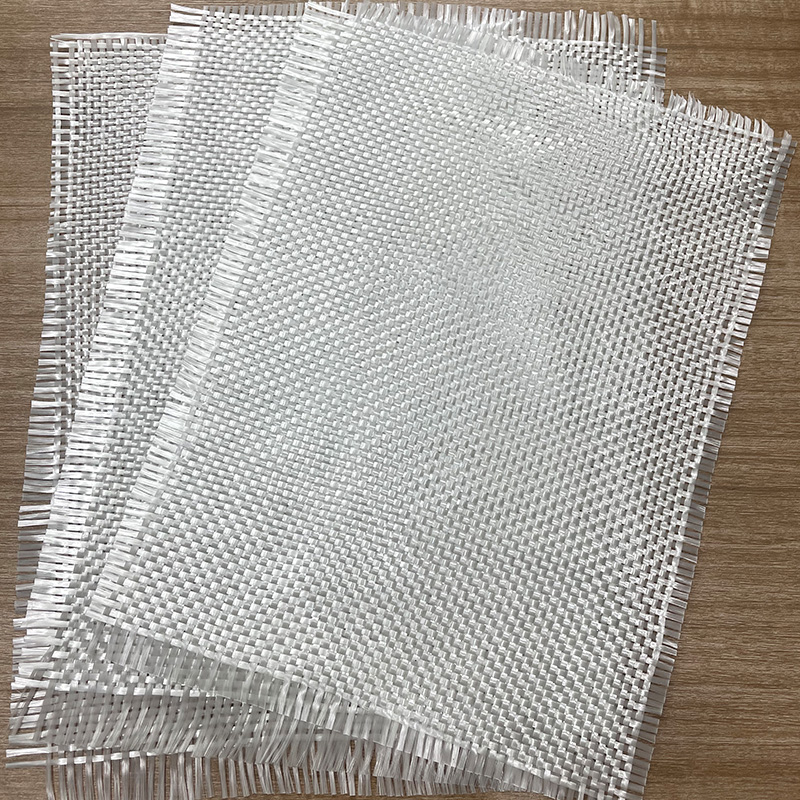
Plain weave alternates each yarn over and under its neighbors, producing a tight, stable cloth with a uniform grid. It drapes less readily than twill, but it stays put when laid flat, handles well for hand layup on flat or gently curved panels, and resists fraying at the edges. Many structural repairs on flat faces favor plain weave for predictable stiffness and easy placement.
| Characteristic | Twill weave | Plain weave |
|---|---|---|
| Drapability | High, suits curves | Moderate, suits flat faces |
| Surface look | Diagonal, smooth ridges | Tight, uniform grid |
| Dimensional stability | Good once tacked | Very stable when laid flat |
| Typical use | Molded parts, rounded members | Flat panels, structural wraps |
Performance Advantages That Matter in Practice
Engineers rarely choose carbon fabric for a single property. The combination of characteristics matters, and each one is worth understanding in the context of real service conditions.
- Tensile strength: Carbon fibers resist stretching along their length far better than most metals of comparable weight, so thin laminates can carry high loads.
- Fatigue behavior: Well-designed laminates tend to degrade more slowly under repeated loading than many metals, which is valuable for parts that flex every day.
- Corrosion and chemical resistance: Carbon does not rust, and properly cured resin systems hold up well against moisture, salts and many industrial chemicals.
- Thermal stability: Carbon keeps its structure at temperatures that would soften many polymers, although the resin system usually sets the practical service limit.
- Electrical conductivity: Carbon conducts electricity, which is useful for shielding and static dissipation but must be managed where electrical insulation is required.
The trade-offs deserve equal attention. Carbon fabric costs more per kilogram than common structural steel, and laminates are anisotropic, meaning their performance depends on loading direction. Good design places fiber orientation deliberately along the load path rather than assuming equal behavior in every direction.
Applications Across Industries
Aerospace and Aviation
Aircraft and spacecraft designers use woven carbon in secondary structures such as fairings, interior panels, access doors and equipment housings, and in some primary components where certification allows. Every kilogram removed from an aircraft reduces fuel consumption over its service life, so weight savings carry real economic value. Fabric laminates also allow complex shapes to be molded with fewer joints and fasteners, which shortens assembly time and removes stress concentrations at mechanical connections.
Building and Infrastructure Reinforcement
In civil engineering, carbon fabric is bonded to concrete and masonry to add tensile capacity where the original structure falls short. Typical applications include flexural strengthening of beams and slabs, confinement wraps for columns that need more ductility, and shear reinforcement in walls. Field studies of retrofitted reinforced concrete columns have repeatedly reported improved confinement and deformation capacity when fabric is wrapped continuously and bonded correctly. The bond is the critical factor, so surface preparation matters as much as the fabric itself. A typical installation sequence looks like this:
- Grind and clean the substrate until it is sound, dry and free of loose material
- Apply a primer to seal the surface and promote adhesion
- Saturate the fabric with resin under controlled conditions
- Place the fabric and consolidate it with rollers to remove trapped air
- Allow the system to cure fully before applying design loads
Other Industrial Uses
Woven carbon also appears in composite housings for industrial equipment, electromagnetic shielding enclosures, protective panels for vehicles and structures, and high-performance sporting goods such as bicycle frames and paddles. Each use case draws on a different mix of stiffness, weight reduction and conductivity.
Selecting the Right Fabric for Your Project
A practical selection process starts with the operating environment and works backward to the fabric specification. Engineers commonly weigh the following considerations:
- Define the load path and whether the part sees tension, compression, bending or impact.
- Decide whether the part must conform to curves or sit on flat surfaces, which points toward twill or plain weave.
- Choose a fabric weight that delivers the needed layer thickness without exceeding practical laminate limits.
- Confirm compatibility between the fiber surface treatment and the resin system you plan to use.
- Review the technical data sheet for tensile values, weight tolerance and roll width.
When comparing options, review the technical data sheets for each woven carbon fiber fabric grade on your shortlist, since published values give the most reliable basis for comparison.
| Typical use | Common fabric weight | Likely weave |
|---|---|---|
| Lightweight molded parts | 100 to 200 grams per square meter | Twill |
| General structural wrapping | 200 to 300 grams per square meter | Plain or twill |
| Heavy laminates and beams | 300 to 600 grams per square meter | Twill or plain, stacked |
These ranges vary by manufacturer and project, so treat them as starting points rather than fixed rules.
Common Installation Mistakes to Avoid
Most performance problems with carbon fabric trace back to installation rather than material failure. Watch for these recurring errors:
- Skipping surface preparation: Dust, oil and loose concrete weaken bond strength more than almost any other factor.
- Incorrect resin ratio: Off-ratio or poorly mixed resin leads to soft spots and reduced stiffness after cure.
- Trapped air: Bubbles between layers form weak planes that can delaminate under load.
- Ignoring fiber direction: Placing fabric without regard to the load path wastes material and can leave critical directions under-reinforced.
- Rushing cure time: Loading a laminate before it reaches design strength can cause creep or debonding.
Keep records of temperature, humidity and cure times during installation. These details help diagnose problems if performance later falls short of expectations.
What Influences Cost and How to Evaluate Suppliers
Pricing for woven carbon fabric depends on several interrelated factors, and comparing quotes is easier when you understand what drives them.
- Fiber grade and filament count
- Areal weight and weave style
- Width, roll length and cutting requirements
- Surface treatment and sizing options
- Order volume, packaging and lead time
Ask any supplier for consistent documentation, including certificates of conformance, batch traceability and sample test data. A supplier that provides clear technical information makes it easier to reproduce results from one batch to the next. Testing samples under your own process conditions often reveals more than comparing headline specifications alone.
Frequently Asked Questions
Q1: What is carbon fiber cloth made of?
It is made from carbon filaments produced from precursor fibers that are stabilized and carbonized at high temperature, then woven into a flexible fabric.
Q2: How does twill differ from plain weave in practice?
Twill drapes more easily over curves, while plain weave stays more stable on flat surfaces and offers equal strength in both fabric directions.
Q3: Is carbon fiber cloth suitable for outdoor structures?
Yes, when paired with a suitable resin and protective coating. Carbon itself resists corrosion, but the resin system determines limits for ultraviolet exposure, moisture and temperature.
Q4: Why does surface preparation matter so much for wraps?
Bond strength depends on the interface between fabric and substrate. Contaminants or weak concrete can prevent load transfer, so the fabric cannot perform as designed.
Q5: How should I compare different fabric options?
Compare fabric weight, weave style, tensile data, width tolerance and documentation, then test samples under your actual resin and cure conditions.