
 English
 中文简体
 русский
 Español
A Hull Repair Scenario That Starts With the Wrong Fabric
Imagine a small boatyard repairing a fiberglass hull after a dock collision. The crew selects a lightweight fabric because it is easy to wet out and quick to lay on curved surfaces. Two days later, the repaired area shows print-through, uneven thickness, and a dull surface that needs extra sanding. The problem was not workmanship alone. The fabric weight, weave style, and resin system did not match the structural target, so the repair had to be redone with a heavier glass fiber cloth selected with the full laminate schedule in mind.
This scenario repeats across many composite jobs, from marine parts and storage tanks to wind blade molds and architectural panels. Choosing a glass fabric is rarely about one property. It is a balance of mechanical needs, processing conditions, surface quality, and cost. The sections below walk through the decisions that matter most, written for engineers, purchasing managers, and fabrication supervisors who need to specify material with confidence.
Weave
Sets load direction, drape, and wet-out speed
Grammage
Sets layer count, build thickness, and resin demand
Resin match
Sets bond quality, surface finish, and durability
How Weave Style Changes the Way Fabric Carries Load
Woven glass fabric is the most familiar form of reinforcement, but weave style is only one of several architectures available. Each architecture arranges fiber bundles differently, which changes how the finished laminate handles tension, bending, and impact. Selecting the wrong architecture can leave a part strong in one direction and weak in another, even when the total fabric weight looks correct on paper.
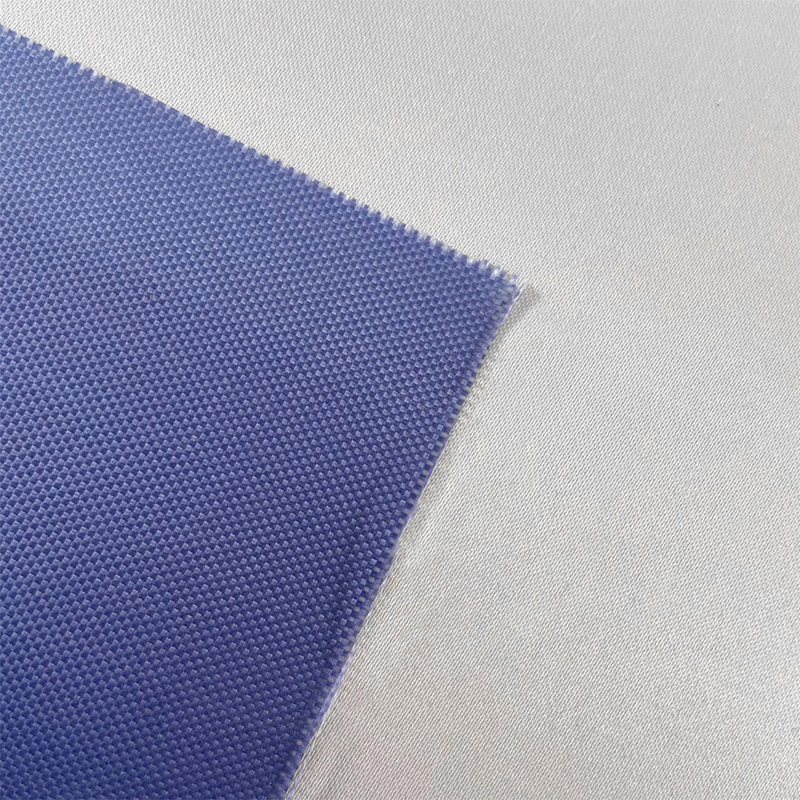
Plain Weave Woven Fabric
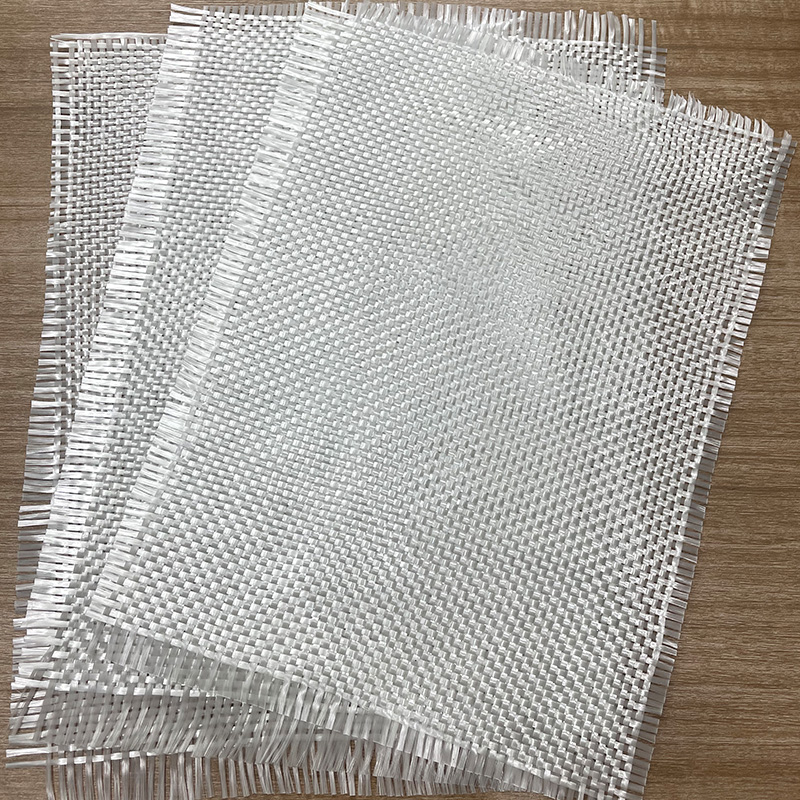
Plain weave is the most common form of woven glass fabric. Warp and weft bundles alternate over and under each other, producing balanced strength in two perpendicular directions. Its tight interlacing gives good dimensional stability and drapes well over simple curves. For general hand lay-up, tanks, and flat panels, plain weave offers a dependable starting point because it is forgiving during handling and wets out evenly.
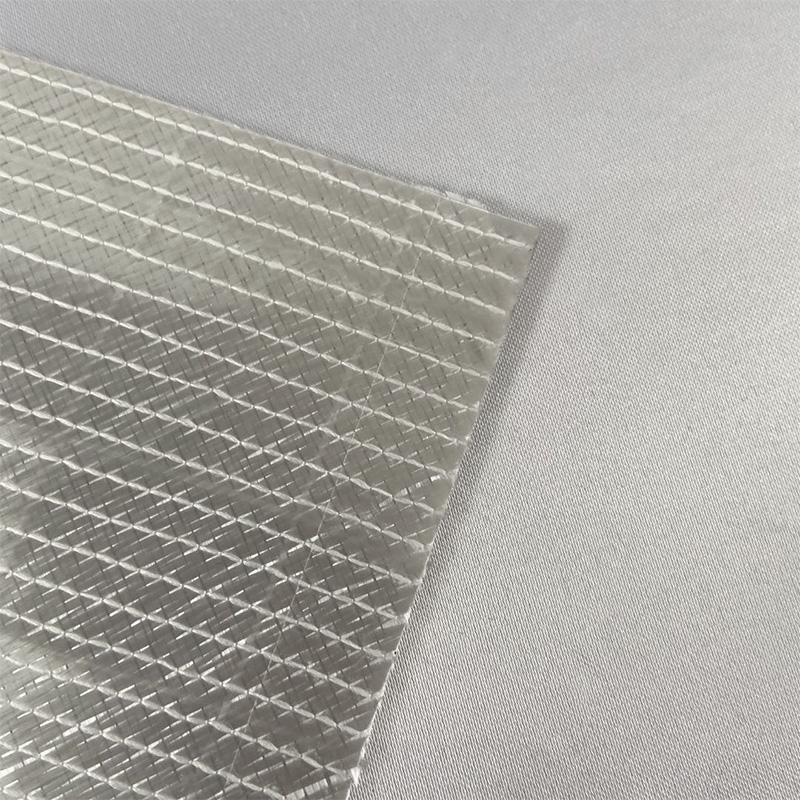
Multi-Axial Fabric
Multi-axial fabric stitches or bonds layers of fibers oriented at different angles, commonly including plus and minus 45 degrees alongside zero and ninety degree plies. This arrangement improves shear performance and reduces the crimp that occurs when fibers weave over and under each other. Parts that see torsion, such as shafts, panels with cutouts, and wind-related structures, often benefit from this architecture because the load paths are more evenly distributed.
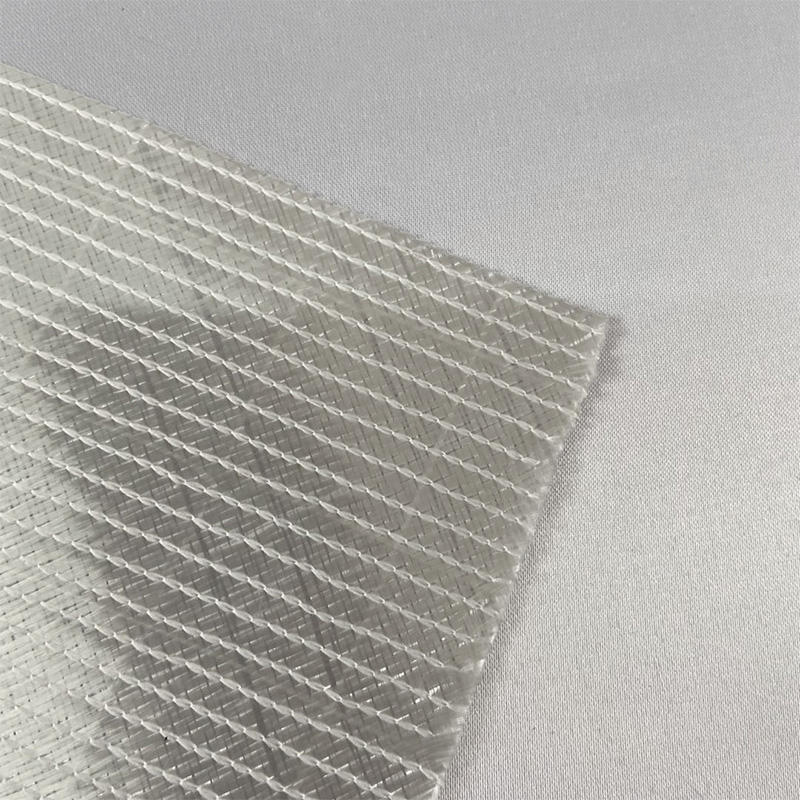
Unidirectional Fabric
Unidirectional fabric places most fibers along one axis, which makes it the most efficient choice when loads run predominantly in a single direction. It is commonly used for beams, spar caps, and reinforcing strips. The trade-off is handling: unidirectional material is less tolerant of misalignment, so layup technicians must keep fibers straight and check orientation carefully during placement.
| Weave Type | Load Direction | Typical Use | Handling |
|---|---|---|---|
| Plain weave | Balanced in two directions | General lay-up, tanks, flat panels | Good drape and wet-out |
| Multi-axial | Multiple angles, including shear | Shafts, torsion parts, complex shells | Stable layers, fewer shifts |
| Unidirectional | Mostly along one axis | Beams, spar caps, strips | Requires careful alignment |
When comparing options, many purchasers start with a general search for woven glass fiber fabric and then narrow the choice based on the structural demands of the part. The best starting point is always the load case, not the catalog description.
Grammage: Matching Fabric Weight to Target Thickness
Grammage describes the weight of fabric per unit area, usually expressed in grams per square meter. It is one of the most useful specification values because it predicts how quickly a laminate will build thickness and how much resin it will absorb. Heavier fabric builds faster with fewer layers, but it also demands more resin control, longer wet-out time, and more care to avoid trapped air.
| Weight Range | Typical Application | Laminate Behavior |
|---|---|---|
| Light, up to 200 grams | Surface finish, detailed molds | Thin skin, quick wet-out |
| Medium, 200 to 400 grams | General hand lay-up, tanks | Balanced build speed and thickness |
| Heavy, 400 to 600 grams | Structural panels, thick sections | Fewer layers, tighter resin control |
For many production teams, the 200 to 600 gram window covers most hand lay-up work. A buyer comparing fiberglass cloth options will usually find that the decision comes down to how many layers the mold can accept and how much thickness the design requires. A useful habit is to list the target thickness first, then work backward to the number of plies and the weight that delivers it.
The chart above illustrates a simple principle: heavier fabric adds more material per pass, which reduces the number of layers needed to reach a target thickness. However, the relationship is not linear in practice, because resin content, compaction, and cure conditions all influence the final laminate.
Resin Compatibility and Wet-Out Behavior
Even the best fabric will underperform if it does not bond well with the resin system. Fabric surface treatments, often called sizing, are chosen to promote adhesion with specific resin families. Matching the sizing to the resin is therefore as important as matching the weight and weave. A mismatch can lead to dry spots, weak interlaminar bonds, or surface defects that appear only after curing.
- Polyester resins are cost-effective and widely used in general composites, but they require careful attention to styrene emission controls and moisture exposure.
- Vinyl ester resins offer improved corrosion resistance and toughness, making them common in tanks, pipes, and marine structures.
- Epoxy systems provide strong bonding and low shrinkage, which suits structural parts and high-performance applications.
Wet-out is the moment when resin fully saturates the fabric. Incomplete wet-out creates air pockets that reduce strength and can become failure initiation points, so fabric selection should always consider how quickly the chosen resin will penetrate the weave.
Heavier fabrics demand longer working times and more deliberate rolling to remove air. A practical approach is to run a small test panel with the intended resin, fabric weight, and layup method before committing to production. The panel reveals surface finish, wet-out speed, and any tendency toward print-through, which are difficult to judge from specifications alone.
Alkali-Free Glass and Why Chemistry Matters
Glass fiber is produced in several compositions, and the alkali content of the glass has a meaningful effect on performance. Alkali-free grades are generally preferred for applications that require strong electrical insulation, good resistance to moisture, and durability in aggressive environments. Because the glass network is more stable, these grades tend to retain strength better when exposed to humidity and chemical contact over long service lives.
For buyers, the practical question is not the chemistry itself but whether the fabric will hold up in the intended environment. The following points help frame that decision:
- Electrical equipment and enclosures benefit from alkali-free grades because of their insulating behavior.
- Outdoor and marine parts gain durability from better moisture resistance, especially when paired with a suitable resin.
- Chemical storage and process equipment may need corrosion-resistant resin systems in addition to the right fabric grade.
- Requests for specific surface finishes or color should be confirmed with the supplier, because pigments and sizing can affect bonding.
When a specification calls for alkali-free glass fiber cloth, it is worth confirming that the grade and sizing have been documented for the same production batch as the rest of the material. Consistency across batches is what keeps laminate properties predictable over time.
Heat, Fire, and Corrosion Behavior in Service
Glass fabric itself is non-combustible, and it maintains its structure at temperatures well above those encountered in most composite applications. In practice, the limiting factor is almost always the resin matrix. Once the resin softens or degrades, the laminate loses stiffness and strength, even though the glass fibers remain intact. This is why temperature ratings should always be assessed at the laminate level rather than the fabric level alone.
Fire behavior follows the same logic. A glass-reinforced laminate resists ignition better than many organic materials, and fire-retardant resin systems can further improve performance. Designers should evaluate smoke output, flame spread, and the behavior of the complete assembly rather than assuming the fabric alone determines fire safety.
Fabric
Non-combustible and dimensionally stable under heat
Resin
Usually sets the maximum service temperature
Assembly
Determines real fire and smoke performance
Corrosion resistance also depends on the system. Glass fibers resist many acids, salts, and moisture-driven degradation, but the resin and the fiber-resin interface are the paths through which attack usually occurs. Protective coatings, gel coats, and proper cure schedules all contribute to long-term durability.
A Practical Selection Workflow
A structured process reduces the risk of specifying the wrong material. The steps below follow the order in which most experienced fabricators make decisions, starting from the load and ending with a verified laminate.
- Define the load cases, including tension, bending, shear, impact, and any environmental exposure.
- Choose the weave architecture that places fibers along the dominant load paths.
- Select the fabric weight that delivers the target thickness with a manageable number of plies.
- Confirm that the sizing and fabric grade are compatible with the chosen resin system.
- Build and test a trial laminate, then adjust weight, layup sequence, or resin content as needed.
Documenting each step is worth the effort. A short specification sheet that records the load basis, chosen weave, weight, resin, and test results becomes a valuable reference when a part is reordered, modified, or audited later.
Common Mistakes Seen in Hand Lay-Up Projects
Most problems in hand lay-up work trace back to a small number of recurring errors. Recognizing them early saves material, time, and rework.
- Ignoring fiber orientation: Laying plies at inconsistent angles weakens the laminate in directions the designer did not intend to stress.
- Overloading resin: Excess resin adds weight, increases shrinkage, and can reduce the fiber fraction below design intent.
- Skipping consolidation: Insufficient rolling or squeegeeing leaves air voids that are invisible on the surface but significant internally.
- Rushing gel time: Starting the next layer before the previous one has partially cured can cause delamination or uneven bonding.
- Mixing lots without documentation: Variations between production lots can shift thickness and resin uptake enough to affect repeatability.
Each of these mistakes is easier to prevent than to repair. A simple checklist at the start of each shift, covering orientation, resin ratio, and gel time, catches most issues before they reach the finished part.
Quality Checks Worth Requesting From Any Supplier
Reliable material performance depends on consistent production and clear documentation. When evaluating a supplier, the following checks provide meaningful evidence that a fabric will behave as specified.
| Check | What It Confirms | Why It Matters |
|---|---|---|
| Grammage verification | Actual weight per square meter | Predicts laminate thickness |
| Width and roll tolerance | Consistent cut width across rolls | Reduces trimming waste |
| Tensile test data | Fiber strength in each direction | Supports design calculations |
| Sizing documentation | Compatibility with the resin family | Prevents weak bonding |
| Moisture-protected packaging | Dry condition on arrival | Avoids wet-out problems |
Requesting these records before the first order helps establish a baseline. Comparing batch data over time reveals whether the supplier maintains tight control, which is often more valuable than a single impressive test result.
Frequently Asked Questions
Q1: Which glass fiber cloth weight is best for general hand lay-up?
Medium weights in the 200 to 400 gram range are commonly used for general work because they balance build speed with manageable wet-out. Heavier fabrics suit thick structural sections, while lighter fabrics suit surface layers and detailed molds.
Q2: Does woven fabric always outperform multi-axial fabric?
No. Woven fabric is excellent for balanced loads and simple shapes, but multi-axial fabric often performs better under shear and torsion because its fibers are oriented along the load paths with less crimp.
Q3: Why does wet-out take longer with heavier fabric?
Heavier fabric contains more fiber per unit area, so resin must travel through a denser structure to saturate every bundle. Working time and rolling effort both increase, and air removal becomes more important.
Q4: Is alkali-free glass always required for composite parts?
Not always, but alkali-free grades are generally preferred for electrical insulation and for durability in moist or aggressive environments. The right choice depends on the service conditions and performance targets of the specific part.
Q5: How can a buyer verify that a fabric will perform as specified?
Request grammage measurements, tensile test records, sizing documentation, and packaging details for each batch. Then run a small trial laminate with the intended resin before committing to full production.