
 English
 中文简体
中文简体 русский
 Español
1. Why Weave Selection Matters in Composite Design
The weave architecture of carbon fiber cloth is not merely an aesthetic choice—it fundamentally determines the mechanical behavior, processability, and surface quality of your finished composite part. Engineers and procurement specialists must evaluate multiple interdependent factors, including drapeability, dimensional stability, resin permeability, and cost-efficiency, before selecting a fabric style.
This technical comparison dissects the structural differences between plain weave and twill weave carbon fiber fabrics, provides quantitative performance benchmarks, and maps each weave to specific manufacturing routes. By the end of this guide, you will have a clear decision framework for specifying the optimal carbon fiber fabric for your project.
Key insight: Weave choice influences up to 30% of the laminate's shear modulus and directly affects drape efficiency in complex molds. Selecting the wrong weave can increase scrap rates by 15–20% in automated layup processes.
2. Plain Weave Carbon Fiber Cloth — Structure and Performance
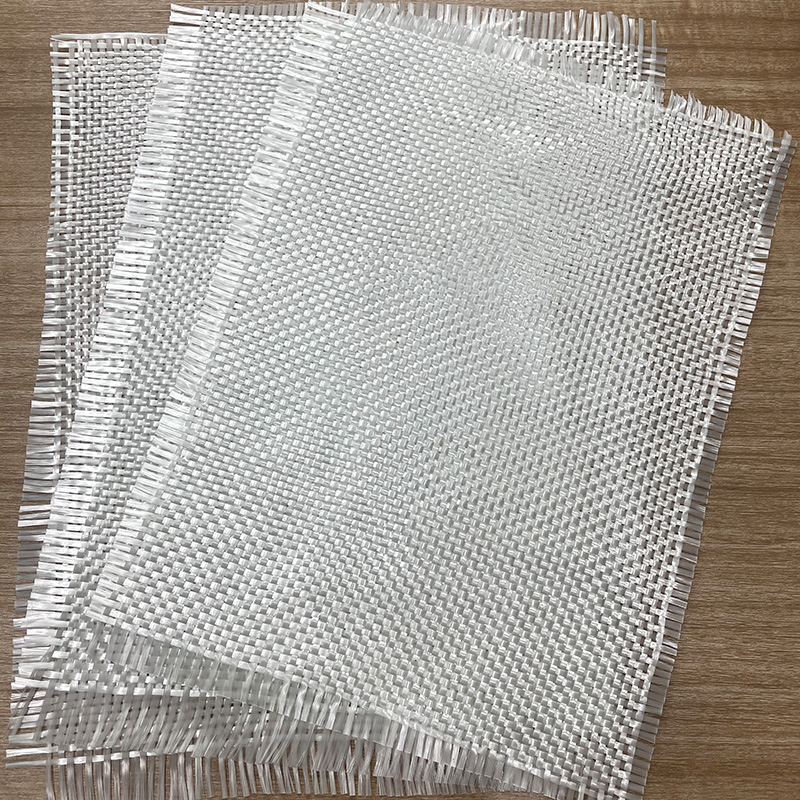
Plain weave, also designated as 1x1 weave, represents the tightest interlacing pattern available in woven carbon fiber cloth. Each warp fiber passes alternately over and under each weft fiber, creating a symmetrical grid with maximum crimp. This compact architecture delivers exceptional dimensional stability but imposes geometric constraints on forming.
- High dimensional stability (low thermal expansion mismatch)
- Resistant to edge fraying during cutting
- Suitable for automated tape laying and pick-and-place
- Lower drapeability — not ideal for double-curvature molds
- Higher crimp reduces in-plane compressive strength
Typical applications: Unmanned aerial vehicle (UAV) structural frames, flat sandwich panel skins, industrial FRP laminates, and precision tooling plates where flatness tolerance is critical.
3. Twill Weave Carbon Fiber Cloth — Structure and Performance
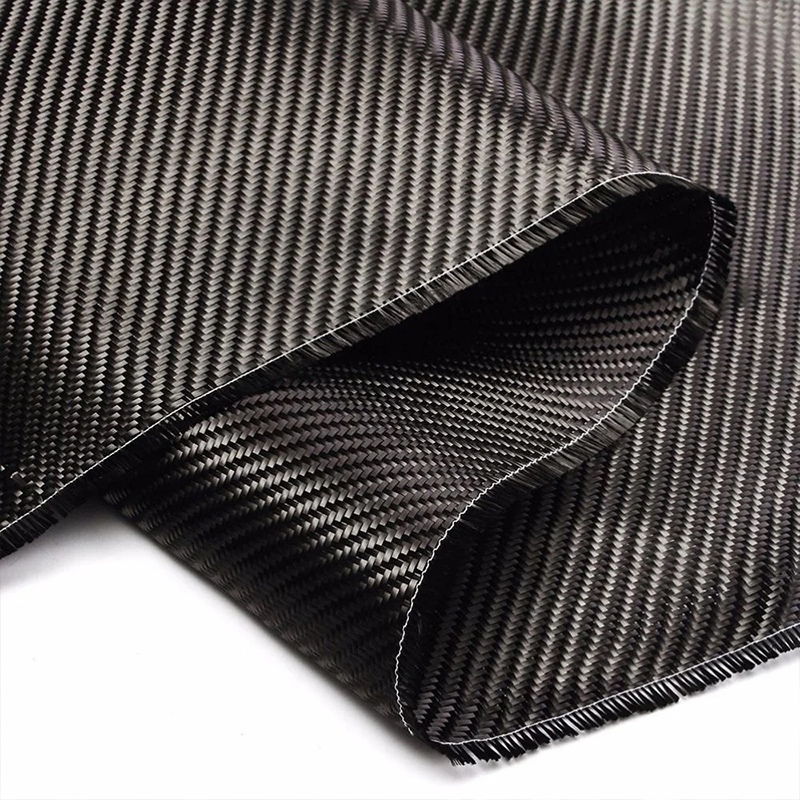
Twill weave, commonly produced as 2x2 twill, features a diagonal offset where each warp fiber passes over two weft fibers and under the next two. This floating pattern generates a distinct herringbone or diagonal texture that is visually iconic for high-performance composites. The reduced interlacing frequency compared to plain weave allows greater fiber mobility during forming.
Key advantage: Twill weave achieves drapeability that conforms to complex contours with minimal wrinkling, making it the first choice for automotive body panels, helmet shells, and aerodynamic fairings.
- Superior conformability to 3D surfaces (radii as tight as 3 mm possible)
- Aesthetic premium — diagonal pattern aligns with design-oriented applications
- Slightly higher cost due to more complex weaving and slower production
Typical applications: Automotive exterior trim, drone fuselage shells, sports equipment (bicycle frames, protective helmets), and marine deck components where both form and finish are paramount.
4. Core Comparison — Plain vs Twill Weave
The table below provides a side-by-side technical comparison of the two weave styles across critical engineering parameters.
5. How to Select Weave Based on Manufacturing Process
The choice between plain and twill weave must align with your primary fabrication route. Each process imposes distinct requirements on fabric behavior.
Hand Lay-Up
Recommend twill weave (200–300 gsm) for superior wet-out and conformability to hand-laid molds.
Vacuum Infusion
Use medium-weight (240–300 gsm) twill or plain; check permeability and flow media compatibility.
RTM / Compression
Plain weave offers higher dimensional stability to withstand injection pressure without distortion.
Prepreg / Autoclave
Unidirectional or plain weave with precise tow alignment; twill used for outer cosmetic plies.
6. Key Technical Parameters Decoded
Understanding the numerical specifications of carbon fiber cloth is essential for material selection. The following parameters directly influence laminate performance.
GSM (Areal Weight)
- ≤200 gsm: surfacing plies, cosmetic layers
- 240–300 gsm: industrial standard (balanced performance)
- >300 gsm: thick laminates; watch for resin starvation
Tow Size (Filament count)
- 3K: fine texture, high cost, used for visible aesthetic parts
- 12K: industry workhorse, cost-effective, good drape
- 24K: heavy tow for large structures, economical but stiffer
Mechanical Reference (Tensile strength)
- T300 class: ~3500 MPa — general purpose
- T700 class: ~4900 MPa — automotive / wind energy
- T800 class: ~5500 MPa — aerospace primary structures
7. Procurement Decision Checklist for Carbon Fiber Cloth
Use this checklist when evaluating suppliers and specifying fabric for your composite project.
- Define application critical properties (strength, stiffness, surface finish)
- Verify ISO 9001, ASTM D3039, or relevant certifications
- Request material test reports (tensile, shear, and flexural data)
- Confirm custom capabilities: width, weight, weave, and roll length
- Review user references and case studies (without brand bias)
- Evaluate cost vs. performance trade-off for your production volume
Pro tip: For prototyping, start with a standard 200 gsm 2x2 twill — it offers a balanced combination of drape and mechanical properties that suits most initial design iterations.
8. Frequently Asked Questions (FAQ)
Q1: What is the practical difference between 3K and 12K carbon fiber cloth?
The primary distinction lies in tow size. 3K fabric (3,000 filaments per tow) produces a finer, tighter weave with superior surface finish and higher cost, commonly used for cosmetic layers. 12K cloth (12,000 filaments) offers better cost-efficiency and is the standard for structural laminates where surface aesthetics are secondary.
Q2: Can carbon fiber cloth be customized in width and areal weight?
Yes, most technical weavers offer custom slit widths ranging from 100 mm to over 1600 mm, and areal weights from 80 gsm to 600 gsm. However, custom specifications typically require minimum order quantities (MOQ) and longer lead times.
Q3: Which resin systems are compatible with carbon fiber cloth?
Carbon fiber cloth is compatible with epoxy, vinyl ester, polyester, and phenolic resins. Epoxy systems provide the best mechanical adhesion and environmental resistance, while polyester is economical for non-critical applications. Always check sizing compatibility.
Q4: What is the typical MOQ for custom carbon fiber fabric?
MOQ varies widely: standard stock fabrics may have no MOQ, while custom weaves or widths often require 100–500 linear meters. Contact suppliers directly for specific project-based MOQ agreements.