
 English
 中文简体
 русский
 Español
Picture a composite shop that has just received a drawing for a bracket. The part has to stay light, hold its shape under repeated load and leave the mold with a clean surface that needs little finishing. The engineer reviewing the drawing keeps returning to one material decision: a 200g carbon fiber plain cloth. Lightweight, stable and easy to lay up, this fabric has earned a place in many production programs where weight matters as much as stiffness.
This guide is written for engineers, purchasing managers and composite fabricators who need practical answers. We explain what the 200 grams per square meter rating really means, why plain weave construction behaves the way it does, which specifications deserve attention on a data sheet, and where this fabric fits best. We also cover how to compare it with twill cloth and heavier weights, and we close with a sourcing checklist and a set of frequently asked questions.
Reading the Weight: What 200g Means in Practice
Fabric weight is one of the first numbers a buyer sees, and it is also one of the most misunderstood. The figure of 200 grams per square meter describes the mass of one square meter of dry fabric before resin is added. Because carbon fiber is far denser than the resin systems used with it, the weight of the fabric directly controls how much fiber ends up in each layer of a laminate. A lighter fabric lets a fabricator build up thickness in finer steps, while a heavier fabric builds faster but can make it harder to follow tight curves.
At 200 grams per square meter, the cloth sits in a versatile middle ground. It is light enough to drape over moderate contours and to stack in multiple plies without excessive bulk, yet heavy enough to contribute meaningful stiffness in a single layer. Many fabricators use this weight for skins, reinforcement plies on top of heavier cores, and parts where the designer wants a thin, uniform cross section.
200 g/m2Dry fabric areal weight
Thin pliesFine thickness control
Good drapeSuits moderate contours
When comparing options, remember that a lighter weight does not automatically mean a weaker part. Ply count, orientation and resin system matter just as much. A designer who needs a specific laminate thickness can often reach it with a 200 gram fabric using a planned stacking sequence, which can also reduce scrap when cutting irregular shapes.
Plain Weave Structure and Why It Matters
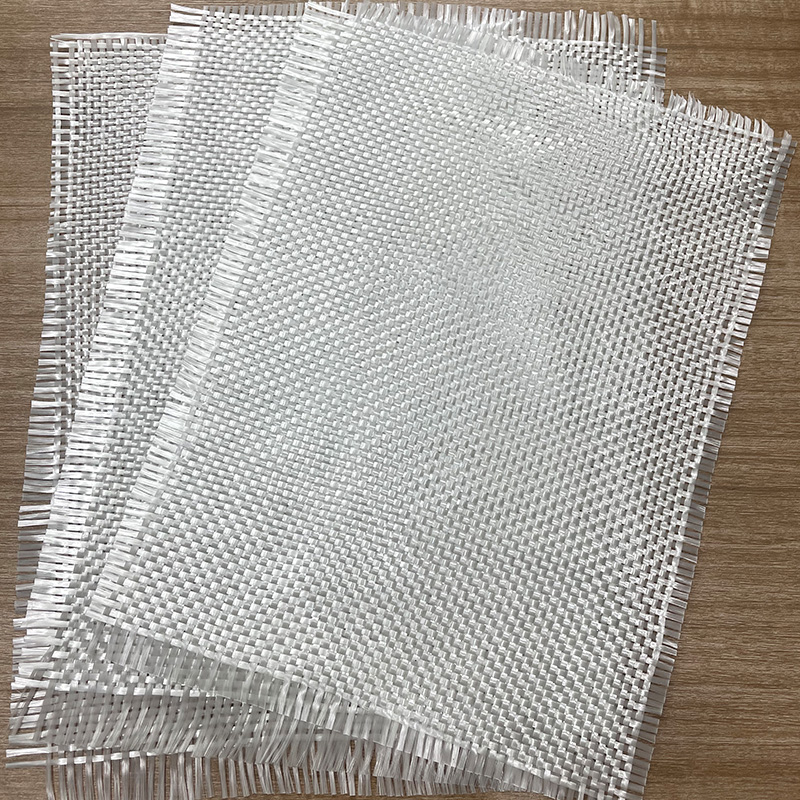
The word plain describes the way warp and weft yarns interlace. In a plain weave, each warp yarn passes alternately over and under each weft yarn, producing a checkerboard appearance. This simple, balanced crossing pattern gives the fabric a stable structure, which makes it easier to handle on the cutting table and less likely to shift when placed on a mold surface.
Plain weave also tends to produce a flat, even surface. Because the yarns cross frequently, the fabric lies close to the tool and displays a uniform appearance that many customers like for visible composite parts. The tight interlacing does limit how far the fabric can stretch in the directions of the yarns, which is one reason plain cloth is often chosen for components that will see loads along the principal axes.
Compared with twill cloth, where each weft yarn crosses over two or more warp yarns before passing under, plain weave is more balanced and more compact. Twill tends to drape more easily and can conform to complex shapes, while plain weave holds its geometry better during handling. Choosing between them is therefore a question of how much conformity the part requires versus how much dimensional stability the fabricator needs at the cutting and layup stages.
Key Specifications and Material Properties
A reliable data sheet gives buyers the information they need to compare suppliers on equal terms. For a 200g carbon fiber plain cloth built from high strength carbon filaments, the most useful parameters are listed below. Always confirm final values against the certificate that accompanies each production lot.
| Item | Typical Specification |
|---|---|
| Fiber Material | Carbon fiber |
| Weave Style | Plain weave |
| Areal Weight | 200 g per square meter |
| Strength Grade | T300 class |
| Key Feature | High modulus, lightweight, good compression strength |
| Width Options | Standard rolls or custom widths on request |
Core Performance Advantages
- High modulus: The fiber resists elastic deformation, helping parts keep their intended shape under service loads.
- Light structure: The low areal weight supports weight reduction goals in vehicles, drones and sporting equipment.
- Stable handling: The balanced weave resists distortion during cutting, kitting and placement on the mold.
- Uniform surface: The fabric produces a consistent finish that reduces the amount of sanding needed before painting or clear coating.
Modulus and strength are related but not identical. A fabric may be strong in tension yet still flex noticeably under bending. Engineers should read both values in context and check how the finished laminate performs in the specific load case of their part.
Where 200g Plain Cloth Fits: Application Range
The fabric shows up in a broad set of industries, but its strongest use cases share a common thread: they need reduced mass, predictable stiffness and a clean outer surface. The list below highlights the categories where fabricators most often specify this weight.
Automotive Lightweight Components
Vehicle designers continue to search for mass savings that do not compromise safety or durability. Interior trim panels, hood skins, spoilers, air intake housings and structural brackets are common candidates for a 200 gram plain weave layer. Engineers often combine it with a core material or additional plies in high load zones, and they use the plain weave's stable surface to reduce finishing time on visible parts.
Carbon Fiber Composite Product Manufacturing
Many producers of carbon fiber composite goods rely on a single fabric weight across a product family to simplify purchasing and training. A 200 gram plain cloth works well for protective covers, instrument panels, accessory housings and decorative elements where a neat appearance matters. Standardizing on one reliable carbon fiber cloth also helps shops reduce inventory and streamline quality checks.
Industrial Structural Panels and Other Uses
Beyond consumer and automotive goods, the fabric supports industrial panels, machine guards, equipment enclosures and reinforcement of lightweight frames. It can also serve in prototyping, where a fabricator needs quick turnaround on test parts without committing to a heavier laminate schedule. In each case the goal is the same: a thin, consistent reinforcement that performs predictably.
Plain Weave Versus Twill and Heavier Fabrics
Buyers rarely evaluate a fabric in isolation. They compare weave styles and weights to find the best balance of cost, handling and performance. Two comparisons come up most often in project discussions.
200g Plain Cloth Versus 200g Twill Carbon Fiber Cloth
Both options share the same nominal weight, so the decision turns on construction and surface behavior. Twill is more flexible and tends to conform better to curved molds, which suits parts with compound shapes. Plain weave is more stable and gives a flatter appearance, which suits panels and parts that will be painted or left visible. Many shops keep both on hand and assign each to the application where its strengths matter most, and some use an in-house twill option alongside the plain cloth for complex geometries.
200g Plain Cloth Versus Heavier Carbon Fiber Cloth
Heavier fabrics, such as those in the 300 and 400 gram range, build laminate thickness quickly and can reduce the number of plies in a stack. However, they are less forgiving on tight radii and can trap air if the layup is not carefully managed. A 200 gram plain cloth is usually the better choice when the part has moderate curvature, when the designer needs fine control over thickness, or when the team wants to fine tune stiffness by adding or removing plies rather than changing the fabric itself.
| Factor | 200g Plain | 200g Twill | Heavier Weights |
|---|---|---|---|
| Drape on curves | Moderate | Good | Limited |
| Dimensional stability | High | Moderate | High |
| Thickness control | Fine | Fine | Coarse |
| Visible surface finish | Very even | Patterned | Even |
From Roll to Part: Process Flow and Handling Tips
A fabric that performs well on paper still needs to be handled correctly on the shop floor. The diagram below shows a typical path from raw material to finished goods, and the notes that follow highlight the steps where most quality issues begin.
Storage is the first factor. Carbon fabric should stay in a clean, dry area away from direct sunlight and large temperature swings. Moisture can affect resin wetting and can cause adhesion problems later. Rolls should remain in their protective packaging until they are needed, and any opened roll should be resealed promptly.
Cutting comes next. Because plain weave is stable, it cuts cleanly with sharp blades or automated cutters. Operators should check edge quality and avoid pulling the fabric under tension, which can distort the weave and throw off the planned fiber orientation. Templates should be labeled with the intended ply direction so that the stacking sequence stays consistent from one batch to the next.
- Keep the workspace clean and free of loose fibers that could reach the part surface.
- Record the roll number and lot number for each ply to support traceability.
- Confirm resin compatibility with the sizing system used on the fabric before production.
- Allow adequate time for resin infusion or impregnation so the laminate fully wets out.
Quality Control and Acceptance Testing
Quality control protects both the supplier and the buyer. A consistent fabric lowers scrap, reduces rework and gives production planners confidence in their schedules. Good acceptance practice starts with the incoming inspection and continues through the entire production run.
A short inspection at receiving often catches problems that would otherwise appear as voids, wrinkles or uneven surfaces only after curing. Spending a few minutes on each roll can save hours of rework later in the process.
Weight consistency is one of the most useful checks. Sampling several points across a roll and comparing them with the specified areal weight helps confirm that the material matches its data sheet. Width should be measured at more than one location, and edges should be inspected for fraying or missing yarns. Visual checks for broken filaments, contamination and uneven weave density complete the basic review.
Where the application is critical, the buyer may request mechanical test results, such as tensile or flexural data on a reference laminate. These tests should be run under agreed standards so that results can be compared across suppliers. Buyers should also ask for batch certificates and retain samples from each lot for future reference.
Sourcing Checklist for Buyers
Sourcing carbon fabric is easier when the specification is clear before the first quote request goes out. The following checklist helps purchasing teams and engineers align on the details that most affect price, lead time and performance.
- Confirm the areal weight tolerance and ask for the measurement method the supplier uses.
- Verify the carbon grade and request a certificate that matches the stated strength class.
- Define the width requirement and check whether standard rolls or custom widths fit your cutting plan.
- Clarify minimum order quantity and whether samples are available before a full commitment.
- Review surface quality expectations for visible parts and for parts that will be bonded.
- Agree on packaging and shipping conditions to protect the roll during transit.
When you contact a supplier, share the target part geometry, the resin system you plan to use and the expected production volume. This information allows the supplier to recommend the most suitable fabric and to estimate how much material you will need. A detailed request usually leads to a more accurate quote and fewer surprises once production starts.
Ask for a sample roll or cut piece before ordering in bulk. Testing the fabric in your own layup process reveals how it handles, how it wets out and how the finished surface looks under your conditions. This step is especially valuable for teams that are moving from another carbon fabric or switching between plain and twill constructions.
Layup Notes for Consistent Laminates
Good laminates come from disciplined layup practice. The plain weave's stability is a real advantage, but it cannot compensate for poor technique. A few habits make a noticeable difference in the finished part.
- Lay each ply smoothly and remove air pockets with a roller or squeegee before adding the next layer.
- Keep fiber orientation consistent across plies unless the design calls for a different stacking pattern.
- Trim overhangs carefully to avoid leaving sharp fiber ends that could create stress concentrations.
- Monitor room temperature and humidity, since both influence resin viscosity and cure behavior.
Mold preparation deserves equal attention. A clean, properly released tool gives the best surface finish and makes demolding easier. Fabricators who use a gel coat or surface film should confirm that it is compatible with the chosen resin and that it cures fully before the first carbon ply is applied.
Frequently Asked Questions
Q1: What is a 200g carbon fiber plain cloth used for?
It is used in lightweight composite parts where a balance of stiffness, low mass and a clean surface is needed. Common examples include automotive trim, brackets, covers, drone frames and industrial panels.
Q2: What does T300 grade mean for carbon fiber cloth?
T300 is a strength class used to describe the carbon filaments in the fabric. It indicates a level of tensile performance suitable for structural and semi structural composite applications. Buyers should always confirm the grade on the certificate for each lot.
Q3: What is the difference between plain and twill carbon fiber cloth?
Plain weave interlaces yarns in a simple over and under pattern, giving a stable, flat surface. Twill crosses yarns over multiple threads, which improves drape on curved shapes. The choice depends on whether the part needs dimensional stability or conformability.
Q4: How is the price of 200g carbon fiber plain cloth determined?
Price depends on fiber grade, weave style, width, roll length, order volume and any special finishing or certification requirements. Requesting quotes based on identical specifications makes comparisons fair and transparent.
Q5: Can the width of 200g carbon fiber plain cloth be customized?
Many suppliers offer custom widths to match cutting layouts and reduce waste. Share your required width, roll length and expected volume so the supplier can confirm feasibility and lead time before production begins.
Making the Right Choice for Your Next Project
A 200 gram plain weave carbon fabric offers a practical combination of light weight, predictable stiffness and an even surface that suits many composite programs. It is not the answer for every part, but it is an excellent starting point when the design calls for thin, stable reinforcement with good handling characteristics. Engineers who understand the weight rating, weave structure and key specifications can make faster, more confident decisions.
If you are evaluating this fabric for an upcoming project, start by defining your part requirements and production process. Then compare the specifications carefully, request samples, and test the material in your own layup environment. For a closer look at the product itself, you can review the carbon fiber cloth details on the product page and send your requirements for a tailored quotation.