
 English
 中文简体
中文简体 русский
 Español
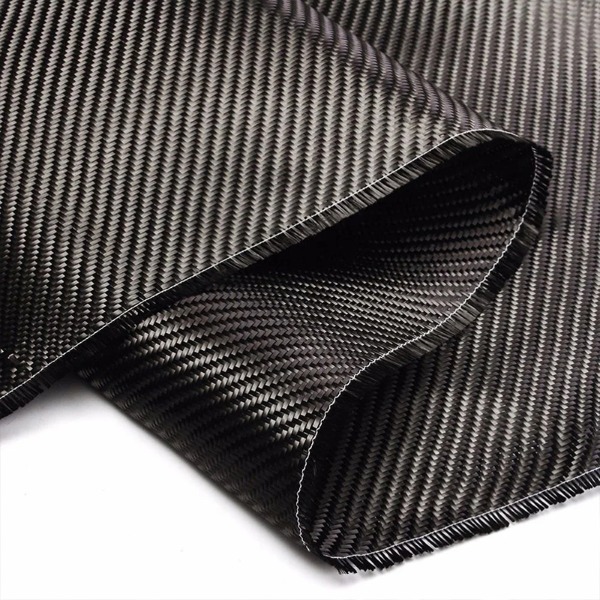
In the search for materials that reduce mass without sacrificing mechanical performance, engineers have progressively moved from metals to advanced composites. Among these, carbon fiber cloth stands out as a primary reinforcement for lightweight structural components. This woven fabric, consisting of continuous carbon filaments, offers a combination of low density, high tensile strength, and exceptional stiffness. When embedded in a polymer matrix, it becomes the backbone of components used in aerospace, automotive, sports equipment, and civil engineering.
Understanding why carbon fiber cloth is so effective requires looking at its fundamental properties, how it compares to conventional materials, and how its architecture can be tailored to specific loading conditions.
The Structural Logic Behind Carbon Fiber Cloth
Structural components must resist bending, torsion, tension, and compression with minimal deflection. Weight reduction amplifies efficiency: less inertia, lower fuel consumption, and easier handling. Carbon fiber cloth achieves this through three key characteristics:
- High specific stiffness – Stiffness per unit density is several times higher than steel or aluminum.
- Tailorable anisotropy – Strength and stiffness can be oriented along load paths by choosing weave patterns and ply stacking sequences.
- Flaw tolerance – The cloth distributes localized cracks across multiple fibers, preventing sudden failure.
Unlike unidirectional tape, which provides stiffness in one direction, carbon fiber cloth offers balanced properties in the fabric plane. This makes it especially suitable for thin-walled structural shells, sandwich panel skins, and components with complex curvatures where loads come from multiple directions.
Comparative Material Properties
To appreciate the advantage of carbon fiber cloth, a direct comparison with traditional structural materials is helpful. The table below summarizes normalized mechanical indicators. Note that exact values vary with fiber type, weave architecture, and resin system, but the relative positions remain consistent.
| Material | Density (g/cm³) | Tensile Strength (relative to steel) | Stiffness-to-Weight Ratio (relative) | Fatigue Resistance |
|---|---|---|---|---|
| Mild steel | 7.85 | 1.0 (baseline) | 1.0 | Moderate |
| Aluminum 6061 | 2.70 | 0.35 | 3.0 | Moderate |
| Carbon fiber cloth composite | 1.55–1.60 | 1.8–2.5 | 8–10 | Excellent |
| Glass fiber cloth composite | 1.90–2.00 | 0.7–1.0 | 2.5–3.5 | Good |
As shown, carbon fiber cloth delivers a stiffness-to-weight ratio roughly 8 to 10 times higher than steel. In practical terms, a structural beam made from carbon fiber cloth can weigh 70–80% less than a steel beam of equal bending stiffness. Furthermore, its fatigue endurance under cyclic loading far exceeds that of metals, which is critical for moving structures such as robot arms, aircraft control surfaces, or bicycle frames.
Architectural Versatility: Weaves and Forms
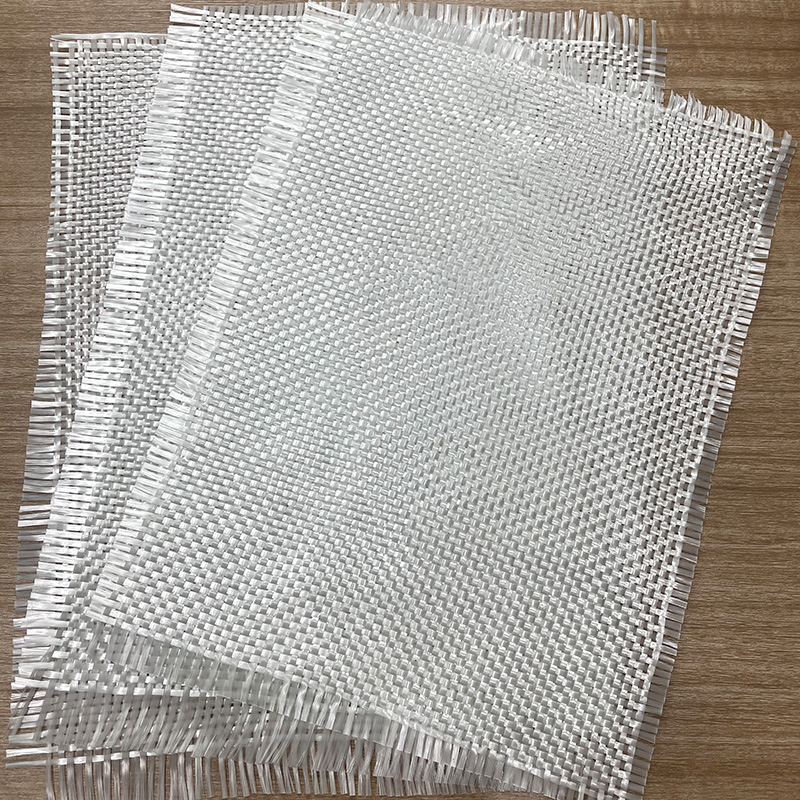
One of the strongest arguments for using carbon fiber cloth is the wide range of weave patterns available. Each pattern influences drapability, resin flow, and mechanical isotropy.
| Weave Type | Drapability | Typical Use Case |
|---|---|---|
| Plain weave | Low to medium | Flat panels, thin laminates with good stability |
| Twill weave (2/2) | Medium to high | Curved components, automotive body panels |
| Harness satin (4HS, 8HS) | Very high | Complex double-curvature parts, aerospace fairings |
| Unidirectional fabric | Low (only one flexible direction) | Spar caps, high-stiffness beams |
For lightweight structural components, twill and satin weaves are often preferred because they conform easily to molds without wrinkling. This ensures uniform fiber volume fraction and minimizes void formation. Moreover, the inherent crimp (waviness) in woven cloth slightly reduces compressive strength compared to unidirectional tape but greatly improves impact damage tolerance and handling during layup.
Load Case Optimization with Carbon Fiber Cloth
Designers choose carbon fiber cloth not only for weight savings but also for directional efficiency. For example:
- Bending-dominated structures (e.g., drone arms, prosthetic limbs): Place cloth plies with fibers oriented at 0° and ±45° to balance longitudinal stiffness and shear resistance.
- Torsion-loaded shafts (e.g., drive shafts, rotor blades): Use ±45° bias cloth or combined hoop and helical layers.
- Impact-prone panels (e.g., racing car floors, protective cases): Layer satin-weave cloth with thin interleaving of thermoplastic toughened layers.
Because carbon fiber cloth is available in intermediate modulus, high modulus, and standard modulus grades, stiffness can be fine-tuned without changing geometry. This modular approach avoids over-engineering and reduces material waste.
Manufacturing Compatibility
Another reason carbon fiber cloth dominates lightweight structural components is its compatibility with established fabrication processes. Key methods include:
- Prepreg layup + autoclave curing – Highest quality for aerospace. The cloth comes pre-impregnated with resin, offering precise fiber alignment.
- Wet layup / hand layup – Suitable for large, one-off parts like wind turbine blades or custom automotive parts.
- Resin transfer molding (RTM) – Cloth is placed dry in a closed mold, then resin is injected. Excellent for medium-volume production with good surface finish.
- Vacuum-assisted infusion – Ideal for large composite panels; the cloth acts as a flow medium, ensuring even resin distribution.
Each method leverages the fabric’s ability to maintain uniform thickness, resist fiber wash (movement during resin injection), and provide predictable mechanical properties. Compared to random-mat glass fiber or chopped carbon fiber, woven carbon fiber cloth offers higher design certainty.
Economic and Lifecycle Considerations
While carbon fiber cloth has a higher raw material cost than metals or glass fiber, its lifecycle value for lightweight structural components is often superior. Reduced mass leads to lower energy consumption in moving applications. For static structures like bridges or robot gantries, lighter components allow smaller supporting frames and cheaper foundations.
Furthermore, repair of damaged carbon fiber cloth laminates is feasible through patch bonding or resin injection, extending service life. Recycling technologies (pyrolysis, solvolysis) have matured, enabling recovery of clean carbon fiber cloth from end-of-life components for use in non-critical applications. This circular potential strengthens the material’s position in sustainability-focused industries.
Limitations and Design Precautions
No material is perfect. Engineers must acknowledge specific limitations of carbon fiber cloth:
- Brittle failure mode – Unlike metal yielding, composite fracture can be sudden. Design requires safety factors and redundancy.
- Galvanic corrosion – Direct contact with aluminum or steel in wet environments causes galvanic corrosion. Electrical isolation layers are mandatory.
- Thermal conductivity – Carbon fibers are electrically and thermally conductive, which may require insulation in electronic or cryogenic applications.
- Ply cut-edge sealing – Raw fabric edges can fray; trimmed laminates need sealing to prevent moisture ingress.
When these factors are properly addressed, carbon fiber cloth remains an unparalleled choice for lightweight structural components.
Conclusion
Carbon fiber cloth delivers a unique proposition for lightweight structural components: outstanding stiffness per weight, designable anisotropy, multiple weave architectures, and compatibility with standard composite processes. While initial cost and brittle failure require careful engineering, the benefits in mass reduction, fatigue life, and tailorability are unmatched by conventional metals or glass fiber fabrics.
FAQ
Q1: Can carbon fiber cloth be used for load-bearing structural parts without metal reinforcement?
Yes. Many load-bearing components such as aircraft floor beams, racing car monocoques, and robotic arms are made entirely from carbon fiber cloth composites. Proper ply design and thickness are chosen to handle expected loads without metal inserts. Metal fittings are sometimes added at bolted joints to reduce bearing stress concentrations.
Q2: Is carbon fiber cloth stiffer than aluminum or steel?
In absolute terms, standard modulus carbon fiber cloth (stiffness ~70 GPa) is less stiff than steel (~200 GPa) but stiffer than aluminum (~69 GPa). However, due to its low density (1.6 vs. 2.7 g/cm³ for aluminum), its specific stiffness (stiffness/density) is roughly three times higher than aluminum and eight times higher than steel. For weight-critical designs, this makes carbon fiber cloth effectively “stiffer per kilogram.”
Q3: Does carbon fiber cloth require special tools for cutting and drilling?
Yes. Standard steel tools wear out quickly. For dry fabric, ceramic or carbide scissors are recommended. For cured laminates, diamond-coated drills and burrs are necessary to prevent delamination. Vacuum extraction is advised because carbon dust is electrically conductive and can damage electronics.
Q4: How does carbon fiber cloth behave under high temperatures?
The fiber itself retains strength above 1000°C in an inert atmosphere, but the polymer matrix (typically epoxy) limits service temperature to 80–180°C for standard resins. High-temperature resins (bismaleimide, polyimide) extend the range to 230–300°C. For applications above 300°C, carbon fiber cloth can be used with ceramic matrices (CMC composites).
Q5: Can carbon fiber cloth be bonded to metal structural components safely?
Yes, but with precautions. A layer of insulating glass fiber cloth is often placed between carbon fiber cloth and metal to prevent galvanic corrosion. Adhesive bonding using structural epoxy is stronger than mechanical fastening for composite-to-metal joints, provided that the metal surface is properly prepared (grit blasting, silane coupling agents).
 Previous